
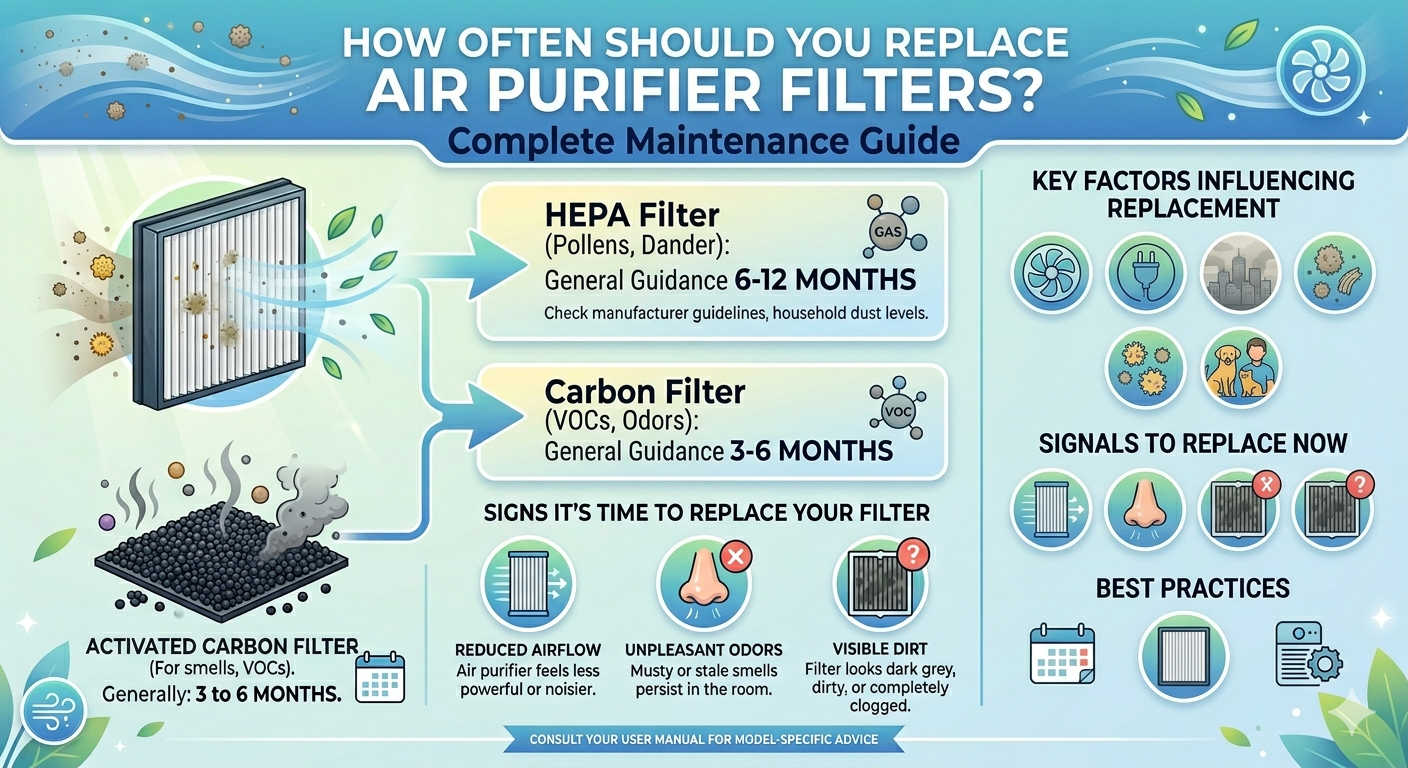
Indoor air quality has become a growing concern for many households. Dust, pollen, pet dander, smoke particles, and other pollutants can accumulate inside homes and affect breathing comfort and overall health. Air purifiers are designed to remove these contaminants and improve indoor air quality, but they can only perform effectively if their filters are maintained properly.
One of the most common questions homeowners ask is how often they should replace air purifier filters. The answer depends on several factors, including the type of filter used, how often the purifier runs, and the overall air quality in your home.
This comprehensive guide explains everything you need to know about air purifier filter replacement. You will learn how different filters work, how long they typically last, how to recognize when a filter needs replacement, and practical tips to extend the life of your air purifier.
Why Replacing Air Purifier Filters Matters
Air purifiers clean the air by pulling it through a series of filters that trap airborne particles. Over time, these filters collect dust, allergens, smoke particles, and other contaminants. As the filter becomes filled with debris, airflow through the purifier becomes restricted.
When this happens, the device becomes less efficient at removing pollutants from the air. A clogged filter may also force the purifier’s motor to work harder, which can increase energy consumption and shorten the lifespan of the device.
Replacing filters at the proper intervals ensures the purifier continues to operate efficiently. Fresh filters allow the purifier to maintain strong airflow, capture particles effectively, and keep indoor air cleaner and healthier.
Average Lifespan of Air Purifier Filters
Although exact replacement schedules vary by manufacturer, most air purifier filters fall within a general range of lifespans.
Typical replacement timelines include:
- Pre-filters: clean every 2–4 weeks and replace every 3–6 months if disposable
- HEPA filters: replace every 6–12 months
- Activated carbon filters: replace every 3–6 months
- UV bulbs (if included): replace once per year
These timelines assume moderate daily usage in a typical home environment. If the purifier runs continuously or the indoor air contains higher levels of pollutants, filters may need replacement sooner.
Understanding the Different Types of Air Purifier Filters
Most air purifiers use multiple layers of filtration to remove different types of contaminants. Each filter serves a specific purpose and has its own replacement schedule.
Pre-Filters
Pre-filters are the first layer in many air purifiers. Their main role is to capture larger particles before they reach the main filter.
Common particles trapped by pre-filters include:
- Pet hair
- Dust and lint
- Large pollen particles
- Fabric fibers
Because these particles are relatively large, pre-filters tend to fill up quickly. Fortunately, many pre-filters are washable or vacuum-friendly.
Cleaning the pre-filter regularly can significantly extend the lifespan of the more expensive HEPA filter behind it.
HEPA Filters
High Efficiency Particulate Air (HEPA) filters are the core component of most air purifiers. They are designed to capture extremely small airborne particles that are invisible to the naked eye.
A true HEPA filter can remove up to 99.97% of particles that are as small as 0.3 microns. This includes:
- Dust mites
- Mold spores
- Pollen
- Pet dander
- Fine particulate matter
HEPA filters are highly effective but cannot be washed or reused. Once the fibers become clogged with particles, the filter must be replaced to maintain performance.
Activated Carbon Filters
Activated carbon filters are designed to remove gases and odors rather than solid particles. They work by trapping chemicals and smells within a highly porous carbon structure.
These filters help reduce:
- Cooking odors
- Smoke smells
- Chemical fumes
- Volatile organic compounds (VOCs)
- Household odors
Unlike HEPA filters, carbon filters gradually lose their odor-absorbing ability as the carbon becomes saturated.
Once this happens, replacement is the only solution.
Factors That Affect How Often Filters Need Replacement
While manufacturers provide recommended replacement schedules, real-world conditions often change how long filters last. Several factors can significantly impact filter lifespan.
Indoor Air Quality
Homes located in areas with high pollution levels tend to clog filters more quickly. Urban environments, heavy traffic areas, and regions affected by wildfire smoke may require more frequent filter changes.
The more pollutants present in the air, the faster the filters fill up.
Pets in the Home
Pets are one of the most common reasons filters need to be replaced sooner than expected. Animal hair and dander can quickly accumulate in the filter system.
Homes with multiple pets often see filters filling up faster due to:
- Shedding fur
- Pet skin flakes
- Litter particles
- Dirt tracked indoors
Regular pre-filter cleaning becomes especially important in pet-friendly households.
Allergy or Asthma Concerns
People who suffer from allergies or asthma often run air purifiers continuously to maintain cleaner air. While this improves air quality, it also causes filters to collect particles faster.
Continuous operation typically shortens the replacement cycle.
Household Activities
Certain activities inside the home release large numbers of airborne particles.
Examples include:
- Cooking frequently
- Burning candles or incense
- Smoking indoors
- Using fireplaces
- Home renovation projects
These activities introduce smoke, grease particles, and fine dust into the air, which can reduce filter lifespan.
Duration of Daily Use
Some homeowners run their air purifier only at night, while others keep it running around the clock. The longer the purifier operates each day, the faster the filter accumulates debris.
If your purifier operates 24 hours a day, expect the filter to reach its replacement point sooner than the manufacturer’s maximum estimate.
Signs Your Air Purifier Filter Needs Replacement
Even if you follow recommended schedules, it is helpful to recognize signs that your filter may already be full.
Reduced Airflow
One of the earliest signs of a clogged filter is weaker airflow. If the purifier seems to blow less air than usual, the filter may be restricting circulation.
Persistent Odors
When activated carbon filters become saturated, they stop absorbing odors effectively. If cooking smells, smoke, or other odors linger longer than usual, the carbon filter may need replacement.
Visible Dust on the Filter
Opening the purifier and inspecting the filter can reveal whether it is heavily coated with dust or debris. Dark discoloration often indicates that the filter has captured large amounts of particles.
More Dust Around the Home
If you notice dust accumulating faster on furniture or surfaces, the purifier may no longer be trapping particles efficiently.
Filter Indicator Lights
Many modern air purifiers include built-in indicators that alert users when it is time to replace the filter. These lights may track usage hours or airflow resistance.
Although helpful, they are not always perfectly accurate, so occasional visual inspection is still recommended.
What Happens If You Do Not Replace Air Purifier Filters
Ignoring filter replacement can lead to several problems.
First, the purifier will become less effective at removing pollutants from the air. Instead of trapping particles, a clogged filter may allow contaminants to circulate back into the room.
Second, the purifier’s motor may experience extra strain as it attempts to force air through the clogged filter. Over time, this additional workload can shorten the lifespan of the appliance.
Finally, in humid environments, trapped particles combined with moisture may encourage mold growth inside the filter.
For these reasons, timely filter replacement is essential for maintaining both air quality and the longevity of your purifier.
Can Air Purifier Filters Be Cleaned Instead of Replaced?
Some filters can be cleaned, while others cannot.
Washable Filters
Certain air purifiers include reusable filters that can be rinsed with water. These are typically made of durable materials such as foam or mesh.
After washing, the filter must be fully dried before being reinstalled.
Pre-Filters
Many pre-filters can be vacuumed or washed periodically. Cleaning them regularly prevents larger particles from clogging the main filter.
HEPA Filters
True HEPA filters are not designed to be washed or vacuumed. Attempting to clean them can damage the delicate fibers and reduce filtration efficiency.
Replacement is the only safe option once they become full.
Carbon Filters
Activated carbon filters cannot be cleaned. Once the carbon pores become saturated with chemicals and odors, the filter must be replaced.
Practical Tips to Extend Filter Lifespan
While filter replacement is unavoidable, several habits can help extend the time between replacements.
Clean the Pre-Filter Regularly
A clean pre-filter captures larger particles before they reach the HEPA filter. This reduces the workload on the main filtration layer.
Keep Your Home Clean
Regular vacuuming and dusting reduce the number of particles circulating through the air purifier.
Close Windows During High Pollution Days
When outdoor pollution levels rise, keeping windows closed prevents large amounts of contaminants from entering the home.
Place the Air Purifier in the Right Location
Avoid placing the purifier too close to walls or furniture. Proper airflow allows the purifier to operate efficiently without unnecessary strain.
Avoid Indoor Smoke
Limiting activities that create smoke or heavy odors helps prevent filters from becoming saturated quickly.
Cost of Replacement Filters
The cost of air purifier filters varies depending on the brand and model. HEPA filters are usually the most expensive component, while carbon filters and pre-filters are generally more affordable.
Many homeowners spend between $50 and $150 per year on replacement filters. Considering the benefits of improved indoor air quality, this cost is often viewed as a worthwhile investment.
Before purchasing a new air purifier, it is a good idea to research the cost and availability of replacement filters.
Frequently Asked Questions
How often should I replace my air purifier filter?
In most homes, HEPA filters should be replaced every 6 to 12 months. Carbon filters usually require replacement every 3 to 6 months, while pre-filters should be cleaned regularly.
Can an air purifier work with a dirty filter?
A purifier may still run with a dirty filter, but its ability to remove pollutants will be greatly reduced. Replacing clogged filters ensures the purifier maintains proper airflow and filtration efficiency.
Do air purifiers automatically detect when filters need replacement?
Some advanced models include sensors or timer-based indicators that notify users when it is time to replace the filter. However, these indicators may not always reflect actual filter condition, so visual checks are still recommended.
Does running an air purifier all day shorten filter life?
Yes. Continuous operation means the filter processes more air, which causes it to collect particles faster. As a result, the replacement interval may become shorter.
Are expensive air purifier filters better?
Higher-quality filters may last longer or capture smaller particles more effectively. However, even the best filters eventually become clogged and require replacement.
Final Thoughts
Air purifiers play an important role in maintaining healthy indoor air, especially in homes where allergies, pets, or pollution are concerns. However, the effectiveness of these devices depends heavily on proper filter maintenance.
Most households should expect to replace HEPA filters once or twice per year and carbon filters several times annually. Cleaning pre-filters regularly can help extend the life of the entire system.
By monitoring filter condition, following recommended replacement schedules, and maintaining good indoor cleaning habits, you can ensure your air purifier continues to perform at its best.
Cleaner filters mean cleaner air—and a healthier home environment for everyone.
You might also like,
- Why Regular HVAC Maintenance Saves You Money (and Boosts System Efficiency)
- Understanding Gas Control Valves in Water Heaters: Complete Troubleshooting & Repair Guide
- Ultimate Water Heater Preventative Maintenance Checklist (2025 Guide)
- True HEPA vs HEPA-Type Filters: Which Is Better for Clean Air in 2026?
- Top Eco-Friendly HVAC Products for Energy-Efficient Homes