
Let’s be honest—your water heater probably isn’t something you think about much. It just sits in a corner, silently heating water for your showers, laundry, dishes, and more. But when it stops working? It suddenly becomes the most important appliance in your house.
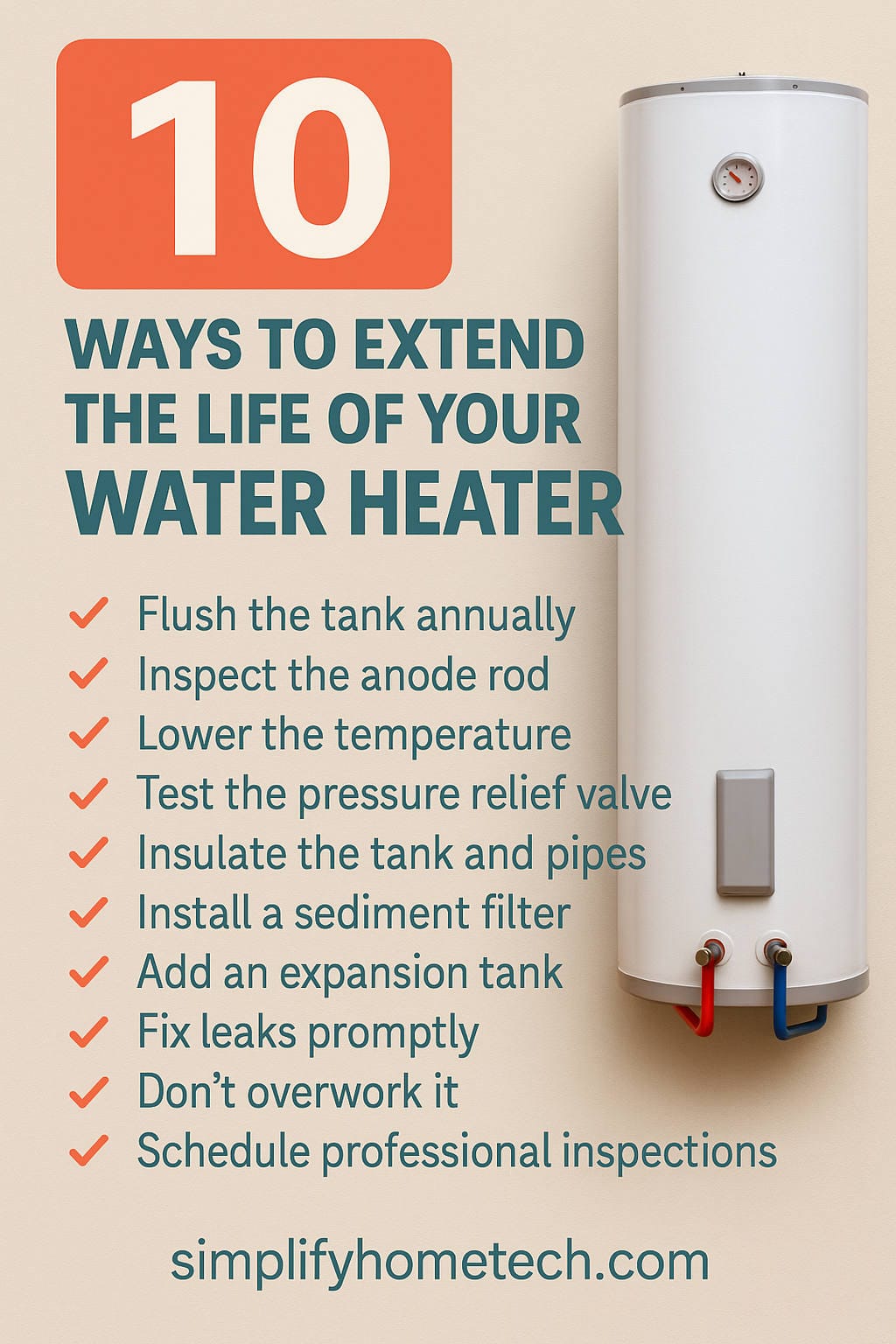
The good news? You can avoid that dreaded moment by giving your water heater a little TLC. With just a bit of regular maintenance and a few smart tweaks, you can keep your unit running smoothly and efficiently for years beyond its expected lifespan. In fact, it’s not uncommon for well-maintained water heaters to outlive their estimated life by 5–10 years.
Whether you have a traditional tank model or a modern tankless system, this guide will walk you through everything you need to know to protect your investment and avoid unexpected cold showers.
Why You Should Care About Water Heater Maintenance
Most water heaters are designed to last about 8 to 15 years, depending on the type and brand. But that number assumes average conditions and basic maintenance. If you ignore your unit, it may start failing after only six or seven years.
On the other hand, a little regular upkeep can save you thousands of dollars in early replacement costs, lower your utility bills, and help you avoid inconvenient breakdowns.
Think of it like changing the oil in your car. It’s not complicated, but if you skip it, you’ll eventually pay the price. Your water heater deserves the same kind of care.
Start by Knowing What Type of Water Heater You Have
Before we dive into maintenance tips, it’s important to understand what kind of water heater you’re working with. Each type has slightly different care needs.
1. Traditional Storage Tank Water Heaters
These are the most common models. They store a set amount of hot water—usually 30 to 80 gallons—in an insulated tank. When you turn on the tap, hot water flows out while the tank refills with cold water to heat up again.
These units are affordable and reliable but prone to sediment buildup, corrosion, and heat loss over time.
2. Tankless (On-Demand) Water Heaters
Tankless models heat water only when you need it. Since there’s no storage tank, they’re more energy-efficient and take up less space. They also tend to last longer—up to 20 years with proper care.
However, they do need regular flushing to prevent mineral buildup, especially in areas with hard water.
3. Heat Pump (Hybrid) Water Heaters
These work like a refrigerator in reverse, pulling heat from the surrounding air to warm your water. They’re energy-efficient and best suited for warm climates or well-ventilated spaces.
They require a bit more space and may need both traditional tank maintenance and ventilation checks.
4. Solar Water Heaters
Powered by solar energy, these systems typically include a storage tank and solar collectors. They’re eco-friendly and low-cost in the long run but require both plumbing and solar system maintenance.
Once you know your model, you can customize your maintenance routine accordingly. Now let’s get into the steps that will help you squeeze every possible year out of your unit.
10 Proven Ways to Extend the Life of Your Water Heater
1. Flush the Tank Annually
One of the easiest and most effective things you can do for a tank-style water heater is flush it once a year.
Over time, minerals—especially in hard water areas—settle at the bottom of the tank. This sediment makes it harder for the unit to heat water efficiently, causing it to work harder, use more energy, and age faster.
How to Flush the Tank:
- Turn off the heater (electric at the breaker, gas at the thermostat).
- Shut off the cold water supply valve.
- Attach a garden hose to the drain valve at the bottom of the tank.
- Open the drain valve and let the water flow into a safe area or bucket.
- Turn on a hot water tap in your home to allow air into the system.
- Once drained, turn the cold water back on for a few minutes to stir up remaining sediment, then drain again.
- Close the valve, remove the hose, turn the water back on, and restart the heater.
If you live in an area with very hard water, you might want to do this twice a year.
Read: How to Flush a Water Heater Step-by-Step (DIY Guide for Homeowners)
2. Inspect and Replace the Anode Rod
Inside every tank water heater is a small but powerful component called the anode rod. Its job? To attract corrosive minerals in the water and take the hit so your tank doesn’t.
Eventually, the anode rod wears out. When it’s completely corroded, the tank itself starts rusting—often the beginning of the end for the unit.
How to Check It:
- Turn off the power and water supply.
- Locate the hex head on the top of the tank.
- Use a socket wrench to remove the rod.
- If more than half the rod is worn away or the steel core is showing, replace it.
A new rod costs around $20–$40 and could extend the life of your water heater by 5 years or more.
Read: How to Check and Replace a Water Heater Anode Rod
3. Lower the Thermostat Temperature
Most water heaters are set to 140°F by default. That’s hotter than most households need and can actually contribute to faster wear and higher energy bills.
By lowering the thermostat to 120°F, you’ll:
- Reduce mineral buildup
- Lower the risk of scalding injuries
- Save up to 10% on your energy costs
- Reduce strain on the unit
You’ll still have plenty of hot water, and your heater won’t have to work as hard.
4. Test the Pressure Relief Valve
The temperature and pressure relief valve (T&P valve) is a safety device that prevents your water heater from exploding under pressure. Yes, literally exploding.
That’s why it’s essential to test it every year to make sure it’s working properly.
Here’s how:
- Place a bucket under the valve’s discharge pipe.
- Carefully lift the valve lever for a second.
- Water should gush out, then stop when you release the lever.
If water continues to leak or nothing comes out at all, the valve should be replaced immediately.
5. Insulate the Tank and Pipes
Older water heaters, especially those in unheated areas like garages or basements, can lose a lot of heat through the tank and connecting pipes.
By wrapping the tank with an insulating blanket and covering the first 3–6 feet of hot water pipes, you’ll:
- Keep water hotter for longer
- Reduce energy consumption
- Help your heater maintain temperature with less effort
Just be careful not to cover the thermostat or burner area if you’re insulating a gas heater.
6. Install a Sediment Filter or Water Softener
If you live in a region with hard water, mineral deposits can wreak havoc on your plumbing—and your water heater takes the brunt of it.
Installing a whole-house sediment filter or water softener can make a big difference. These devices reduce the amount of calcium and magnesium entering the tank, which:
- Slows down sediment buildup
- Keeps heating elements clean
- Extends the life of the tank, valves, and pipes
Water softeners are a larger investment, but they benefit your entire plumbing system and appliances.
7. Install an Expansion Tank
In many modern homes, especially those with closed-loop plumbing systems, pressure can build up when water expands during heating. This constant pressure wears on your heater, potentially shortening its life.
An expansion tank provides a cushion that absorbs this excess pressure, protecting both your water heater and plumbing system.
If you’ve ever noticed dripping from your T&P valve or unusual pressure fluctuations, ask a plumber whether your setup could benefit from an expansion tank.
8. Fix Leaks and Replace Worn Parts Early
Water heaters have various seals, valves, and gaskets that can degrade over time. A small drip might not seem like a big deal today, but it can turn into a flood tomorrow—or at least a corroded tank.
Inspect your heater regularly for:
- Moisture around the base
- Rust stains or mineral buildup
- Loose connections
- Dripping drain valves
Catching and fixing issues early can prevent serious damage and extend the unit’s lifespan significantly.
9. Avoid Overworking the System
Just like any machine, overworking your water heater shortens its life. If your family constantly runs out of hot water, your unit may be too small.
Consider these tips to reduce the load:
- Space out showers and laundry loads
- Use low-flow showerheads and aerated faucets
- Wash clothes in cold water when possible
- Upgrade to a properly sized unit if your needs have changed
This not only reduces wear on the system but also lowers your utility costs.
10. Have It Professionally Inspected Every 1–2 Years
Even if you’re great about DIY maintenance, there are things only a professional plumber can catch. A routine inspection can identify:
- Early signs of corrosion
- Gas or electric issues
- Improper venting
- Efficiency losses
- Code compliance problems
If your heater is more than five years old, a yearly inspection is a wise investment to avoid surprise breakdowns.
How Do You Know It’s Time to Replace Instead?
No water heater lasts forever. Even with excellent care, eventually, the cost of keeping an old unit running will outweigh the benefits.
Here are some signs your water heater is on its last legs:
- It’s over 10–12 years old (tank models) or 15+ years (tankless)
- You notice rusty water or metallic taste
- It makes loud banging, popping, or rumbling noises
- You’re running out of hot water faster than usual
- There are frequent repairs or recurring leaks
If you’re facing an expensive repair on an older unit, it may be time to replace it with a newer, more efficient model.
Final Thoughts: A Little Effort Goes a Long Way
Water heaters might not get much attention, but they work hard every day to keep your home comfortable. With regular maintenance and a few smart upgrades, you can protect your investment and get the most out of your system.
Here’s a quick summary of what to do:
- Flush your tank at least once a year
- Check and replace the anode rod every 2–3 years
- Lower the thermostat to 120°F
- Test the pressure relief valve annually
- Insulate your tank and hot water pipes
- Address leaks promptly
- Install a sediment filter or water softener if needed
- Consider an expansion tank for closed systems
- Don’t overload the system
- Schedule professional inspections regularly
None of these tasks are expensive or complicated, but together they can add years to your heater’s life, save energy, and prevent costly surprises.
And if your current unit is past its prime, don’t wait for it to fail—start researching your next water heater today. Newer models are more energy-efficient and may even qualify for rebates or tax incentives.
Want help maintaining your water heater?
Reach out to a local plumber or service technician to schedule a quick checkup. A few minutes of maintenance could save you hundreds—if not thousands—down the line.
Your future self (and your morning shower routine) will thank you.
You might also like,