
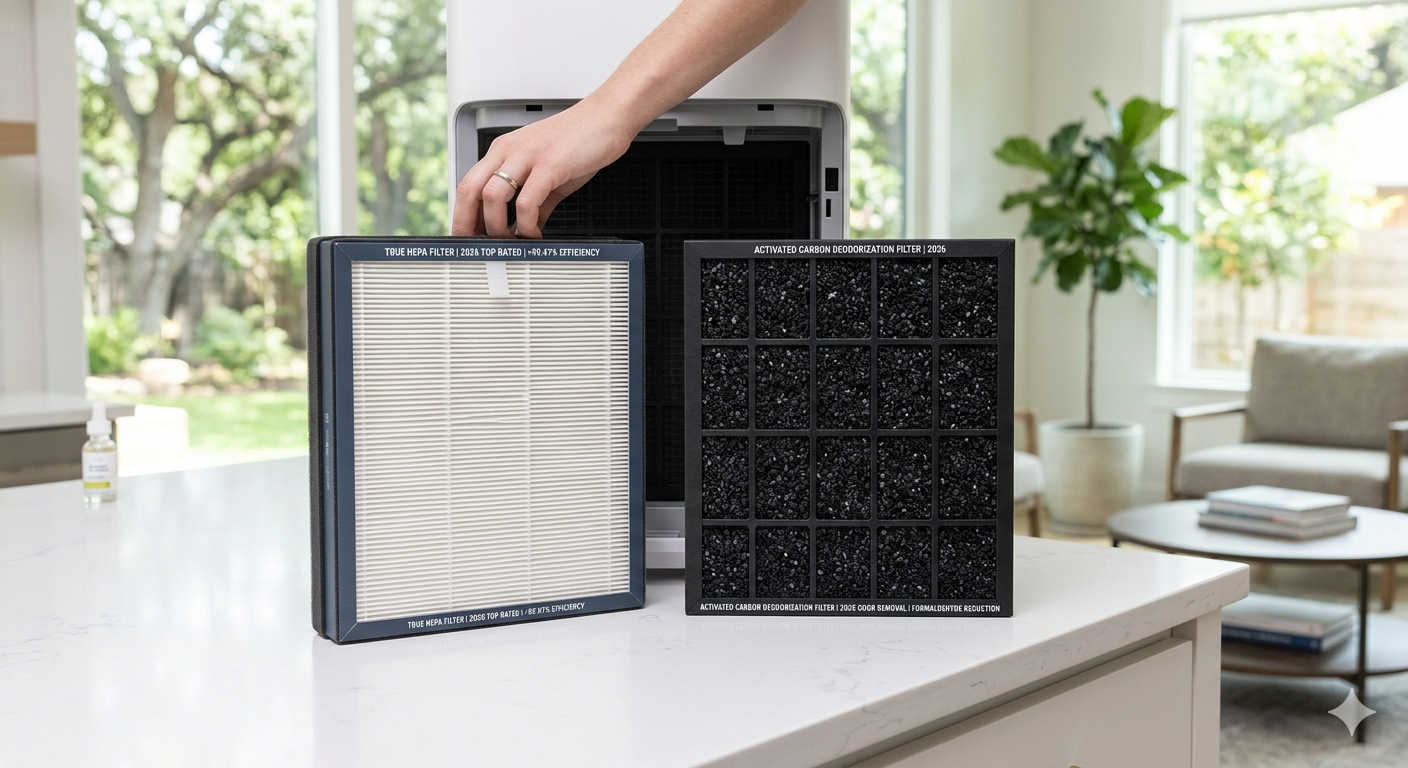
Indoor air quality has become one of the most important aspects of maintaining a healthy home. With increasing air pollution, allergens, and indoor odors, air purifiers have become common in many households. However, an air purifier is only as effective as the filters inside it. If those filters are clogged or outdated, the device cannot clean the air efficiently.
This is why replacing your HEPA filter and deodorization (carbon) filter set regularly is essential. These replacement sets allow air purifiers to continue capturing microscopic particles while also eliminating odors and harmful gases.
In this guide, you will learn how HEPA and deodorization filters work, why replacement sets are important, what features to consider before buying, and which replacement filter sets are among the best choices in 2026.
Understanding HEPA Filters
A HEPA filter, which stands for High Efficiency Particulate Air filter, is designed to capture extremely small airborne particles. True HEPA filters can trap 99.97% of particles as small as 0.3 microns, which includes dust, pollen, mold spores, pet dander, and smoke particles.
HEPA filters use a dense network of fibers arranged in multiple layers. When air passes through this mesh, particles are trapped in several ways:
- Interception – particles stick to the fibers as they pass by
- Impaction – larger particles collide with fibers and become trapped
- Diffusion – tiny particles move randomly and eventually stick to fibers
Because of their high filtration efficiency, HEPA filters are widely used in hospitals, laboratories, aircraft ventilation systems, and residential air purifiers.
For households dealing with allergies, asthma, or dust problems, HEPA filters are one of the most effective tools available.
What Is a Deodorization Filter?
While HEPA filters are excellent at removing particles, they cannot eliminate odors or chemical gases. That role belongs to the deodorization filter, which is usually made from activated carbon.
Activated carbon has millions of microscopic pores that trap odor molecules and volatile organic compounds (VOCs). Instead of filtering particles, carbon filters absorb gases and smells from the air.
A good deodorization filter can remove:
- Cooking odors
- Cigarette smoke
- Pet smells
- Chemical fumes
- Household cleaning odors
- Paint and solvent vapors
Most modern air purifiers combine HEPA filtration with activated carbon filtration to ensure both particle removal and odor control.
Why HEPA and Carbon Filters Are Sold as Replacement Sets
Many air purifier brands sell their filters as replacement sets rather than individual pieces. This is because both filters work together as part of a multi-stage filtration system.
Over time, both filters become saturated with pollutants. When that happens, they cannot perform effectively.
Replacing them together ensures the purifier continues to deliver clean air without performance loss.
Typical replacement timelines include:
- HEPA filter: every 6–12 months
- Carbon filter: every 3–6 months
The actual lifespan depends on air quality, usage hours, and room size.
Benefits of Replacing Your Filter Set Regularly
Replacing the HEPA and deodorization filters on time offers several important benefits.
Improved Air Quality
Fresh filters capture airborne pollutants efficiently. This leads to noticeably cleaner indoor air.
Better Allergy Relief
Dust mites, pollen, and pet dander are common triggers for allergies. A clean HEPA filter removes these particles before they circulate in the room.
Odor Removal
Activated carbon filters gradually lose their ability to absorb smells. Replacing them restores odor removal performance.
Increased Air Purifier Efficiency
Clogged filters restrict airflow. When filters are replaced, the purifier can circulate air more effectively.
Longer Device Lifespan
When airflow is blocked, the purifier’s motor must work harder. Regular filter replacement reduces strain on internal components.
Key Features to Look for in a Replacement Filter Set
Not all replacement filters provide the same level of performance. When shopping for a new set, it is important to evaluate several factors.
HEPA Filtration Grade
HEPA filters are classified by efficiency levels. Higher grades capture more particles.
Common classifications include:
- H11: captures around 95% of particles
- H12: captures about 99.5%
- H13: captures up to 99.95%
- H14: captures approximately 99.995%
For home air purifiers, H13 HEPA filters are often considered the best balance between performance and cost.
Activated Carbon Quality
The quality and density of carbon determine how well odors and gases are removed.
Look for filters made from:
- Coconut shell activated carbon
- High-density carbon granules
- Multi-layer carbon sheets
Higher carbon content usually means better odor absorption.
Compatibility With Your Air Purifier
Replacement filters must match the exact purifier model. Even filters from the same brand may not be interchangeable.
Before purchasing, check:
- Model number of your purifier
- Filter dimensions
- Manufacturer compatibility list
Filter Lifespan
Manufacturers typically estimate filter lifespan in months or hours of operation.
Filters used in highly polluted areas may need replacement sooner than expected.
Certification and Quality Standards
Reliable filters often include certifications such as:
- True HEPA certification
- AHAM verification
- Environmental safety approvals
These certifications help confirm that the filter meets performance standards.
Best HEPA Filter and Deodorization Filter Replacement Sets in 2026
Below are several replacement filter sets that remain popular choices due to their reliability, filtration efficiency, and compatibility with well-known air purifiers.
Levoit Core 400S Replacement Filter Set
Levoit air purifiers have gained popularity for their balance of affordability and smart features.
The replacement filter set for the Core 400S includes an H13 HEPA filter combined with an activated carbon layer designed to remove smoke, dust, and cooking odors.
Key benefits include:
- High-efficiency particle filtration
- Strong odor removal
- Easy installation
- Compatibility with smart air purifier features
This replacement set is ideal for households dealing with dust, seasonal allergies, or urban pollution.
Coway Airmega Replacement Filter Set
Coway is widely known for producing premium air purifiers with powerful filtration systems.
The Airmega replacement set typically combines a thick HEPA filter with a dense activated carbon block. This design provides strong performance in environments with heavy odors or chemical fumes.
Highlights include:
- Advanced multi-stage filtration
- Large carbon capacity for odor removal
- Durable filter construction
- Long replacement intervals
Although Coway filters tend to cost more than average, they are often praised for consistent performance.
Honeywell HEPA and Carbon Filter Set
Honeywell has been a trusted brand in air purification for many years. Their replacement filter sets are known for reliability and easy availability.
The typical Honeywell set includes a true HEPA filter paired with a carbon pre-filter.
Advantages include:
- Proven filtration performance
- Simple installation
- Affordable replacement cost
- Wide compatibility with Honeywell purifiers
This option works well for users who want dependable filtration without spending too much on replacement filters.
Dyson HEPA and Carbon Replacement Filters
Dyson air purifiers are designed with sealed filtration systems that combine HEPA and activated carbon layers in one unit.
The Dyson replacement filter set is engineered to capture ultra-fine particles while absorbing gases and odors.
Key features include:
- Glass fiber HEPA filtration
- Activated carbon granules for gas removal
- Durable construction
- Long service life
Although Dyson replacement filters are relatively expensive, they are known for excellent build quality.
Sqair HEPA Replacement Filter
The Sqair purifier is a compact air purifier designed for smaller spaces such as bedrooms or offices.
Its replacement HEPA filter captures fine particulate matter, including dust, pollen, and airborne allergens.
Benefits include:
- Compact design
- Affordable replacement cost
- Efficient filtration for small rooms
In areas with high pollution levels, the filter may need to be replaced more frequently.
How HEPA and Carbon Filters Work Together
Most modern air purifiers use a multi-stage filtration process.
The process typically includes:
- Pre-filter layer Captures large particles such as hair and lint.
- HEPA filtration stage Removes microscopic particles including allergens and fine dust.
- Activated carbon stage Absorbs odors and chemical gases.
Each stage plays a specific role, creating a complete air purification system.
Signs Your Air Purifier Filter Needs Replacement
Even if the recommended replacement time has not been reached, certain signs may indicate that a filter change is necessary.
Common warning signs include:
- Weak airflow from the purifier
- Increased dust accumulation in the room
- Lingering odors that no longer disappear
- Allergy symptoms returning
- Filter indicator light turning on
If these symptoms appear, replacing the filter set can restore purification performance.
How to Replace an Air Purifier Filter Set
Replacing HEPA and carbon filters is usually a quick and straightforward process.
Follow these steps:
- Turn off the air purifier and unplug it.
- Open the purifier’s filter compartment.
- Carefully remove the used filter.
- Insert the new HEPA and carbon filter set.
- Close the compartment securely.
- Reset the filter replacement indicator if your purifier includes one.
Always consult the user manual for specific instructions related to your device.
OEM vs Third-Party Replacement Filters
When purchasing replacement filters, you will usually encounter two types.
Original Manufacturer Filters
These are produced by the same company that made the air purifier.
Advantages include:
- Guaranteed compatibility
- Reliable filtration performance
- Manufacturer certification
The downside is that they tend to be more expensive.
Third-Party Filters
Independent manufacturers produce these filters for popular purifier models.
Advantages include:
- Lower price
- Wider availability
However, quality may vary. Some third-party filters may not meet true HEPA standards, so it is important to check reviews and specifications carefully.
Tips to Extend Filter Lifespan
Although filters must eventually be replaced, certain practices can help extend their lifespan.
Clean the Pre-Filter
Many air purifiers include a washable pre-filter. Cleaning it regularly prevents large particles from reaching the HEPA filter.
Keep Windows Closed During High Pollution
Outdoor dust and smoke can quickly clog filters.
Run the Purifier at Appropriate Speeds
Using high speed continuously may shorten filter lifespan.
Vacuum Around the Air Purifier
Keeping the surrounding area clean reduces the amount of dust entering the filter.
Frequently Asked Questions
How often should HEPA filters be replaced?
Most HEPA filters last between 6 and 12 months, depending on air quality and purifier usage.
Do carbon filters need replacement more often?
Yes. Activated carbon filters typically require replacement every 3 to 6 months because they become saturated with odors and gases.
Can HEPA filters be washed?
No. Washing a HEPA filter damages the fine fiber structure and reduces filtration efficiency.
Are third-party filters safe to use?
They can be safe if they meet true HEPA standards and are designed for your purifier model. However, quality varies widely.
Do air purifiers remove odors completely?
Air purifiers with high-quality activated carbon filters can significantly reduce odors, but extremely strong smells may require additional ventilation.
Final Thoughts
Maintaining clean indoor air requires more than just purchasing a good air purifier. Regularly replacing the HEPA filter and deodorization filter set is essential for keeping the purifier working effectively.
A high-quality replacement set helps remove airborne particles, eliminate unpleasant odors, and maintain strong airflow inside the device.
When choosing a filter set in 2026, focus on HEPA grade, carbon quality, compatibility with your purifier model, and overall durability. Investing in a reliable replacement filter ensures your air purifier continues delivering the clean, fresh air your home deserves.
You might also like,
- 10 Easy Ways to Reduce Allergies at Home | Allergy-Friendly Living
- 12 Energy-Saving Tips for Your HVAC System to Lower Bills in 2026
- Are Air Purifier Replacement Filters Worth It? Cost, Benefits & Best Picks (2026)
- Best Air Purifiers for Dust Mites and Pet Dander in 2026: Top Picks for Allergy Relief
- Best Electrostatic Pleated AC Filters for Allergies & Dust (2026 Guide)