
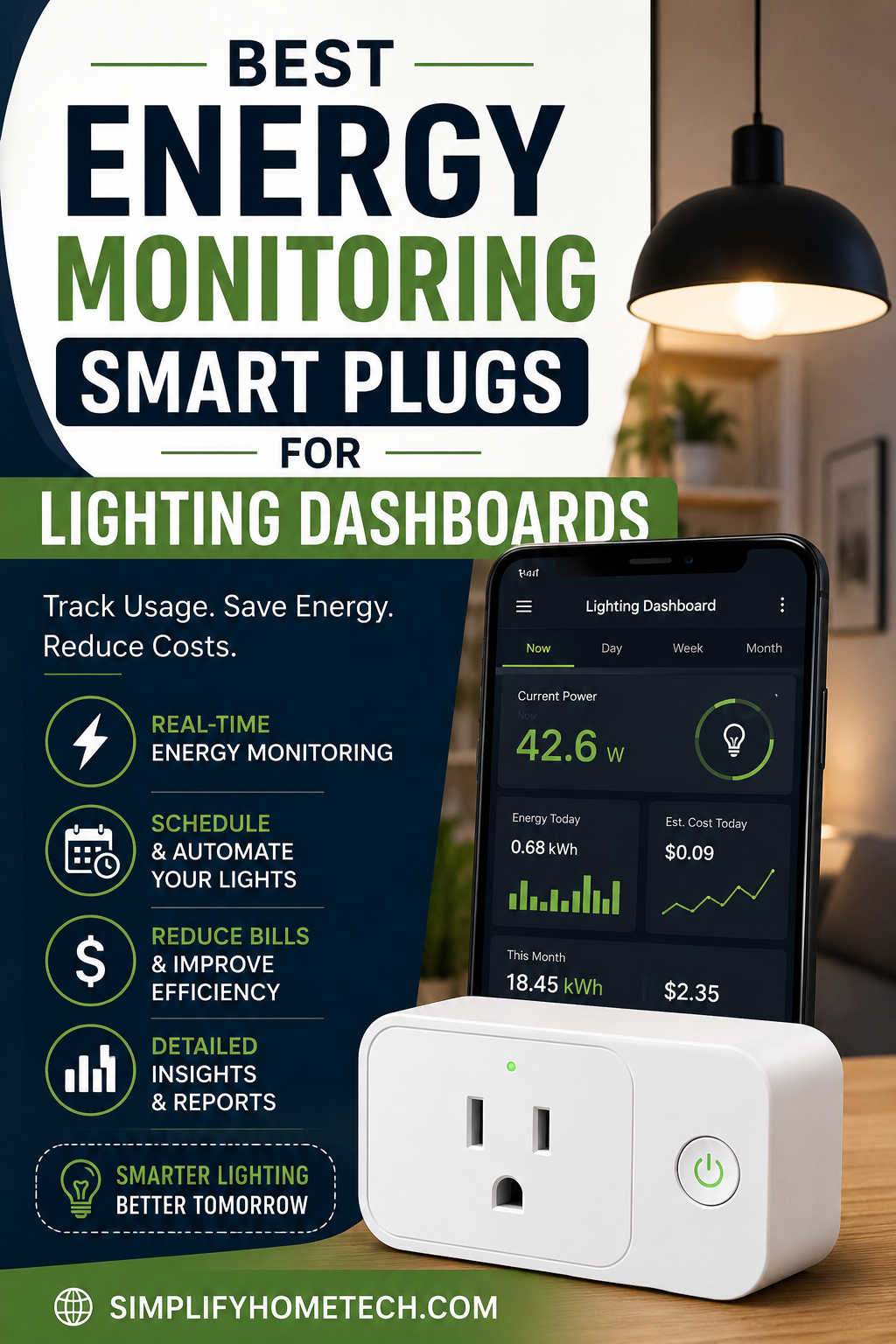
Energy costs continue to rise, and both homeowners and businesses are looking for practical ways to reduce electricity consumption without sacrificing comfort or productivity. While upgrading to LED lighting is a major step toward efficiency, understanding exactly how much energy your lighting system uses is equally important. This is where energy monitoring smart plugs become valuable.
Unlike standard smart plugs that simply allow remote control, energy-monitoring smart plugs provide real-time insights into electricity usage. When connected to lighting dashboards, they help users track consumption, identify waste, automate schedules, and make data-driven decisions that lower utility bills.
Whether you’re building a smart home, managing an office, operating a retail space, or creating a Home Assistant dashboard, choosing the right energy-monitoring smart plug can significantly improve visibility into your lighting system’s performance.
This guide explores the best energy monitoring smart plugs for lighting dashboards, explains their key features, and helps you determine which model is best suited for your specific needs.
Why Energy Monitoring Matters for Lighting Systems
Lighting is often overlooked when discussing energy management. Many people assume that switching to LED bulbs solves the problem entirely. While LEDs consume considerably less electricity than traditional bulbs, lighting can still account for a meaningful portion of monthly energy usage, especially in larger homes and commercial buildings.
The challenge is that most people don’t know exactly how much energy individual lighting fixtures consume. Without accurate data, it’s difficult to identify inefficiencies or determine whether automation strategies are actually reducing costs.
Energy monitoring smart plugs bridge this gap by providing detailed consumption data at the device level. Instead of relying on estimates, users gain access to real-time information that reveals when lights are being used, how much power they consume, and where energy waste occurs.
Over time, these insights can lead to significant savings and a better understanding of overall electricity usage.
What Is an Energy Monitoring Smart Plug?
An energy monitoring smart plug is a compact device that sits between a wall outlet and an electrical appliance. In addition to enabling remote control and automation, it measures electrical consumption and reports usage statistics through a connected app or dashboard.
Most modern energy-monitoring smart plugs track:
- Instantaneous power consumption in watts
- Total energy usage in kilowatt-hours (kWh)
- Voltage and current readings
- Historical energy trends
- Estimated operating costs
- Runtime and scheduling data
When these measurements are integrated into a lighting dashboard, users gain a clear picture of how lighting impacts their energy bills.
Benefits of Using Smart Plugs with Lighting Dashboards
The biggest advantage of combining smart plugs with lighting dashboards is visibility. Instead of guessing where electricity is being used, users can see precise consumption figures in real time.
This visibility creates opportunities for optimization. For example, you may discover that decorative outdoor lighting consumes more energy than expected, or that conference room lights remain on long after employees leave for the day.
Another important benefit is automation. Most energy-monitoring smart plugs support schedules, scenes, and routines. Lights can automatically switch off during inactive hours, activate at sunset, or respond to occupancy sensors.
Cost tracking is another valuable feature. Many platforms allow users to enter local utility rates, making it possible to estimate monthly and annual operating expenses directly from dashboard data.
For businesses, energy monitoring can support sustainability initiatives and provide documentation for energy-efficiency programs.
Key Features to Look for When Choosing a Smart Plug
Not all smart plugs are created equal. While many devices offer basic monitoring, the best models provide advanced analytics and seamless dashboard integration.
Accurate Energy Measurement
Accuracy should always be a priority. Reliable smart plugs provide precise readings that help users make informed decisions. Inaccurate measurements can undermine the entire purpose of energy monitoring.
Dashboard Compatibility
The ideal smart plug should integrate with your preferred smart home or building management platform. Popular options include Home Assistant, SmartThings, Apple HomeKit, Google Home, Amazon Alexa, OpenHAB, and Node-RED.
Strong compatibility ensures that energy data can be displayed alongside other automation metrics.
Historical Reporting
Real-time data is useful, but historical trends provide deeper insights. The ability to review daily, weekly, monthly, and annual consumption patterns allows users to identify recurring inefficiencies and measure the impact of energy-saving initiatives.
Local Control Options
Many smart home enthusiasts prefer devices that can operate locally without relying entirely on cloud services. Local control improves reliability, enhances privacy, and often delivers faster response times.
Automation Capabilities
Advanced scheduling and automation features help maximize energy savings. The best smart plugs support routines based on time, occupancy, weather conditions, or custom triggers.
Best Energy Monitoring Smart Plugs for Lighting Dashboards
TP-Link Kasa Smart Plug Mini with Energy Monitoring
TP-Link has established itself as one of the most trusted brands in the smart home market. The Kasa Smart Plug Mini combines simplicity, reliability, and strong energy-monitoring capabilities.
The Kasa app provides real-time power consumption data and historical usage reports that are easy to understand. Setup is straightforward, making it an excellent option for beginners who want immediate access to energy insights.
Its compact design also prevents it from blocking adjacent outlets, which is a practical advantage in many homes.
Best for: Homeowners seeking an affordable and user-friendly solution.
Shelly Plug Plus
Shelly has become a favorite among advanced smart home users, and for good reason. The Shelly Plug Plus offers detailed energy monitoring while supporting local operation, MQTT communication, and extensive integration possibilities.
Unlike many consumer-focused products, Shelly devices are designed with flexibility in mind. They work exceptionally well with Home Assistant and other custom dashboard platforms.
For users who enjoy building sophisticated energy-monitoring systems, the Shelly Plug Plus is one of the strongest options available.
Best for: Home Assistant users and advanced automation projects.
Eve Energy
Eve Energy is particularly attractive for users invested in the Apple ecosystem. With support for HomeKit, Matter, and Thread networking, it delivers excellent performance and strong privacy protections.
One of its biggest strengths is the company’s focus on local processing and user privacy. Data remains under the user’s control rather than being heavily dependent on cloud infrastructure.
Energy tracking is detailed and reliable, making it a premium option for Apple users seeking deeper insight into lighting consumption.
Best for: Apple HomeKit households.
Emporia Smart Plug
Emporia takes a different approach by focusing heavily on energy analytics. The company’s ecosystem is built around electricity monitoring and efficiency improvements.
The smart plug integrates well with Emporia’s broader energy-management platform, making it ideal for users who want comprehensive visibility across multiple devices and circuits.
Detailed reporting and cost-analysis tools help users identify opportunities for meaningful energy savings.
Best for: Users focused on reducing overall electricity costs.
Meross Smart Plug with Energy Monitoring
Meross has earned a reputation for offering feature-rich products at competitive prices. Its energy-monitoring smart plug supports multiple ecosystems, including Apple HomeKit, Amazon Alexa, and Google Assistant.
The setup process is straightforward, and the mobile app provides clear visibility into energy consumption patterns. While its analytics may not be as extensive as specialized energy-management platforms, it delivers excellent value for everyday users.
Best for: Multi-platform smart homes.
Sonoff S41s
The Sonoff S41s remains a popular choice among DIY enthusiasts. One reason is its support for custom firmware, which opens the door to extensive customization and advanced integrations.
When paired with platforms such as Home Assistant, the Sonoff S41s can become a powerful component in a highly detailed lighting dashboard.
Although it may require more technical expertise than some alternatives, its flexibility makes it appealing to experienced users.
Best for: DIY smart home enthusiasts and open-source projects.
Which Smart Plug Is Best for Home Assistant Lighting Dashboards?
For Home Assistant users, compatibility and local control often matter more than mobile app convenience.
The Shelly Plug Plus stands out as the best overall choice because it offers robust local control, detailed energy reporting, and excellent integration with Home Assistant.
The Sonoff S41s is another strong contender, particularly for users comfortable modifying firmware and building custom automations.
Meanwhile, the TP-Link Kasa Smart Plug provides a simpler alternative for users who want dependable monitoring without extensive configuration.
Ultimately, the best choice depends on your technical experience and desired level of customization.
How Energy Monitoring Smart Plugs Reduce Electricity Costs
The true value of energy monitoring lies in actionable insights.
For example, a homeowner may discover that landscape lighting remains active throughout the night, consuming significantly more electricity than expected. By adjusting schedules, annual energy costs can often be reduced immediately.
Businesses frequently uncover even larger opportunities. Office lighting left running during evenings, weekends, or holidays can generate unnecessary expenses that go unnoticed without monitoring.
Once consumption patterns become visible, organizations can create automation rules that eliminate waste while maintaining adequate lighting levels.
The result is lower operating costs, improved efficiency, and measurable energy savings.
Building an Effective Lighting Dashboard
A successful lighting dashboard should do more than display numbers. It should transform raw data into meaningful insights.
Useful dashboard metrics include real-time power consumption, daily energy usage, monthly costs, peak demand periods, and historical trends. Visualizations such as charts and graphs make it easier to identify patterns and evaluate performance over time.
Platforms such as Home Assistant, Grafana, Node-RED, and OpenHAB are particularly effective because they allow users to combine energy data with occupancy information, weather conditions, and automation rules.
This integrated approach creates a more complete picture of building performance.
Future Trends in Smart Energy Monitoring
The smart energy sector continues to evolve rapidly. Artificial intelligence is beginning to play a larger role in identifying inefficiencies and recommending optimization strategies.
Predictive maintenance is another emerging trend. By analyzing electrical consumption patterns, monitoring systems can detect unusual behavior that may indicate failing equipment.
At the same time, growing adoption of renewable energy systems is encouraging deeper integration between lighting controls, solar generation, and battery storage.
As technology advances, energy-monitoring smart plugs will become increasingly sophisticated and valuable.
Final Thoughts
Energy monitoring smart plugs are among the most practical investments for anyone seeking greater control over lighting-related energy consumption. They provide detailed visibility into electricity usage, support automation, and help transform raw energy data into meaningful savings.
For most homeowners, the TP-Link Kasa Smart Plug offers the best balance of affordability and functionality. Home Assistant users will likely benefit most from the Shelly Plug Plus, while Apple users should strongly consider Eve Energy. Those prioritizing detailed analytics may find Emporia to be the most compelling option.
Regardless of which model you choose, integrating energy-monitoring smart plugs with a lighting dashboard can deliver better efficiency, lower operating costs, and a smarter approach to energy management. As electricity prices continue to rise and sustainability becomes increasingly important, these devices represent a simple yet powerful step toward a more energy-efficient future.