
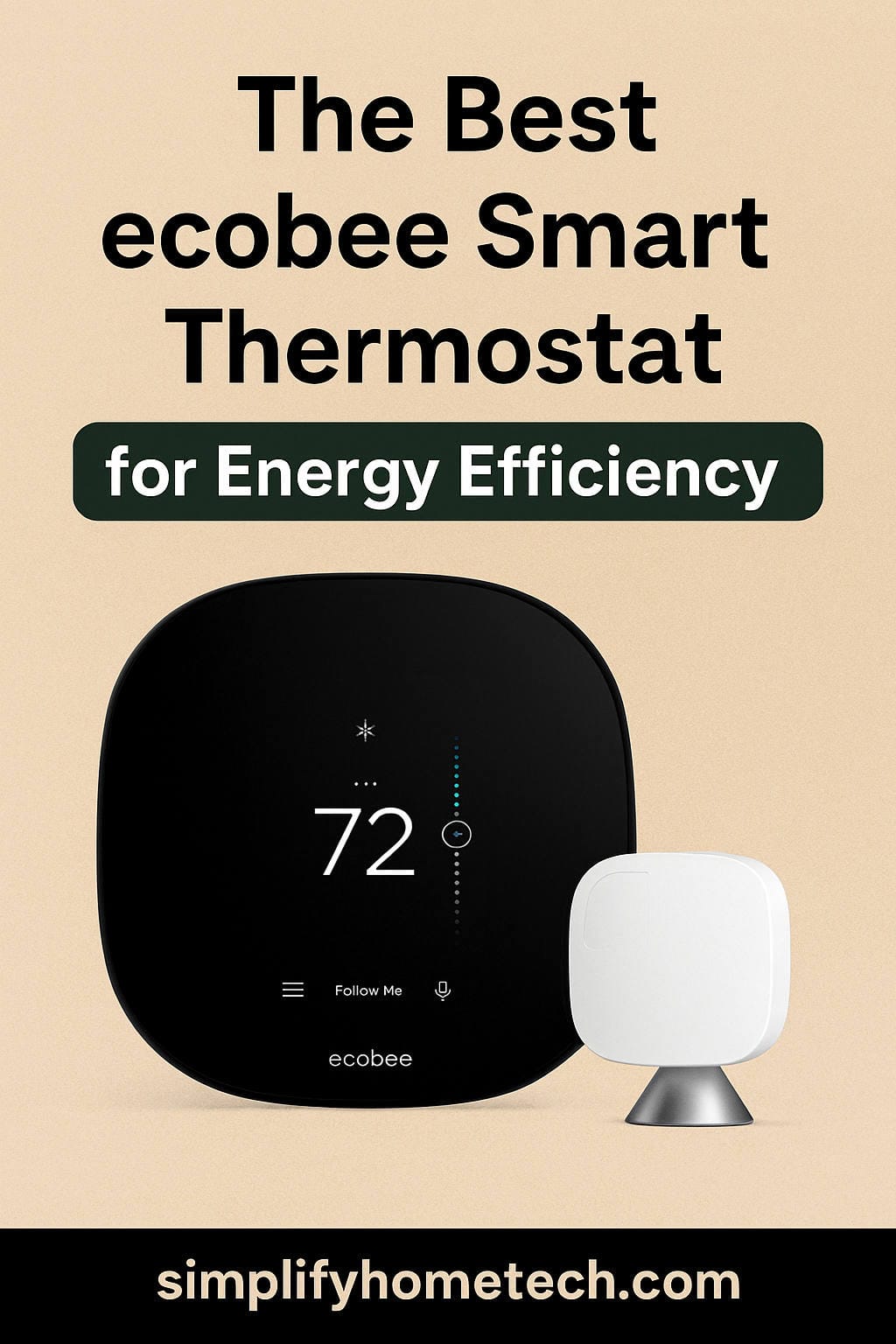
You know that sinking feeling when you open the monthly utility statement and the number stares back at you, somehow higher than last month even though you swore you were being careful? I’ve been there. Most of us have.
We fiddle with the dial. We tell the kids to stop touching the thermostat. We put on an extra sweater in the winter and close the blinds during summer afternoons. And yet, the house still feels uneven. The living room is an icebox while the upstairs bedroom remains stubbornly warm and stuffy. You are paying to condition a space that never quite feels right.
The problem usually isn’t your HVAC equipment. It’s the brain controlling it. A traditional thermostat sits in a hallway, reads the temperature from one tiny spot, and makes decisions that affect every single room in your home. It doesn’t know if you are upstairs sleeping or three miles away at the grocery store. It just runs.
A smart thermostat flips this logic on its head. And among the sea of options available right now, ecobee has built a reputation specifically around solving this efficiency puzzle. The question is not whether an ecobee can save you money. It’s which specific ecobee model will save you the most based on how you actually live.
I want to walk you through that decision. No marketing fluff. No regurgitated spec sheets. Just a practical look at which thermostat deserves a spot on your wall and how to make it actually deliver on that promise of lower utility bills.
Why ecobee Wins When We Talk About Savings
Before diving into individual products, it helps to understand what sets ecobee apart from other smart thermostats in the context of energy efficiency. The company didn’t just build a Wi-Fi-connected temperature dial. They built a system designed to stop one specific type of waste: conditioning rooms that nobody is using.
Traditional thermostats are blind. They read one temperature in a hallway and force your entire HVAC system to run until that single square foot of wall space hits the target. Meanwhile, your sun-drenched dining room is roasting hot, and the shady basement is freezing. Your system runs and runs, trying to satisfy a sensor that has no clue what is happening elsewhere.
ecobee’s approach rests on two pillars that directly attack this problem.
First, there is occupancy detection. The system wants to know if human beings are actually home. If the house is empty, there is zero reason to maintain a perfect temperature. ecobee can figure this out through smartphone locations, built-in radar sensors, or small remote accessories placed in different rooms. When the last person leaves, the thermostat eases into an energy-saving setback. When the first person returns, it gently brings the temperature back to a comfortable level.
Second, and this is the real differentiator, there is multi-room temperature averaging. Instead of obsessing over the hallway, ecobee lets you place sensors in the rooms you actually use. It then averages those readings to decide whether the system should run. Even smarter, certain models can follow you around the house. During the day, the sensor in your home office takes priority. At night, the bedroom sensor guides the system while the empty living room is allowed to drift a few degrees warmer or cooler.
This targeted approach means your HVAC runs less often and for shorter cycles. Fewer compressor cycles translate directly to lower energy consumption. And because you are only conditioning the spaces that matter at any given time, comfort actually improves alongside the savings.
The ecobee Lineup at a Glance
ecobee currently offers a few distinct models, and they share some important common ground. All of them are Energy Star certified. All of them support smart scheduling, smartphone geofencing, and integration with the eco+ software suite that enables advanced energy-saving features. They all look clean and modern on a wall.
However, the way they achieve energy savings differs quite a bit. The hardware you buy determines the efficiency strategy available to you. Let’s break down each model honestly, including where they shine and where they fall short.
ecobee3 lite: The Affordable Entry Point
The ecobee3 lite is the budget-friendly member of the family. It offers a sleek design and a solid foundation of smart features without a price tag that makes you flinch.
How it approaches energy efficiency
The primary savings mechanism here is smartphone geofencing. You set up a virtual boundary around your home using your phone’s location services. When you cross that boundary and leave, the thermostat triggers a Smart Away mode. It lets the house drift to a more energy-efficient temperature until you return. When you cross back into the geofence, it starts bringing the temperature back.
The ecobee3 lite is also compatible with ecobee’s remote SmartSensors, but those are sold separately. The thermostat itself does not include any built-in occupancy radar. It cannot see you. It relies entirely on your phone and any additional sensors you purchase.
Where it works best
- Smaller apartments and condos with an open floor plan
- Homes where the thermostat is centrally located in a high-traffic area
- Budget-conscious shoppers who still want an Energy Star certified upgrade
Where it falls short
- No built-in radar for occupancy detection means the system can be tricked. If you leave your phone on the kitchen counter and go for a long walk, the thermostat thinks you are still home and maintains your comfort schedule unnecessarily.
- No included remote sensor. To unlock the multi-room averaging that makes ecobee special, you need to spend extra money.
- It reacts to your location rather than proactively sensing your presence inside the home.
The ecobee3 lite is a massive upgrade from a dumb thermostat. If you live in a simple, open space and always carry your phone, it will save you money. But it leaves some efficiency potential on the table that the higher-end models capture.
ecobee Smart Thermostat Enhanced: The Thoughtful Middle Ground
This model steps things up noticeably. It looks and feels like a premium device, and it includes hardware features that the Lite simply does not have.
How it approaches energy efficiency
The Enhanced model adds a built-in radar sensor directly into the thermostat itself. This radar can physically detect motion and presence in the room where the thermostat is installed. If the living area goes quiet for an extended period, the thermostat knows. It does not need your phone to tell it that nobody is around. This is a proactive, hardware-level approach to occupancy detection.
Another significant efficiency feature is compatibility with the ecobee SmartSensor for doors and windows. These small sensors mount on a door or window frame. If a door opens while your HVAC is running, the thermostat can automatically pause the system. When the door closes, it resumes. This prevents that all-too-common scenario of blasting conditioned air straight out an open entrance.
Where it works best
- Mid-sized homes where the thermostat sits in a main living area
- Families who want window and door sensor integration
- People who appreciate a more premium look and feel
Where it falls short
- The radar is only in the thermostat itself. It still cannot see into the far bedroom upstairs.
- Remote SmartSensors for temperature averaging are still a separate purchase. The box includes the thermostat only.
- If your thermostat is in a rarely-used hallway, the radar will not add much value because it will rarely detect motion even when the house is full.
The Enhanced model is a strong choice if your thermostat placement happens to align with a high-traffic zone. The door and window sensor integration is genuinely useful for preventing wasteful heating and cooling. But the multi-room efficiency puzzle remains partially unsolved without additional accessories.
ecobee Smart Thermostat Premium: The Efficiency Champion
If you are serious about maximizing energy savings and own a multi-room home, this is the model that deserves your attention. The Premium sits at the top of the lineup, and the reason has everything to do with what ecobee includes in the box.
How it approaches energy efficiency
The Premium includes a remote SmartSensor right in the package. This is not a trivial accessory. It is a battery-powered puck that measures both temperature and occupancy. You place it in a priority room, which for most people is the primary bedroom or a problematic space that never seems to feel right.
The killer feature here is something called “Follow Me” mode. When enabled, the thermostat intelligently averages the temperature readings from occupied rooms and ignores empty ones. During the afternoon, it might focus on the living room sensor while the bedroom sensor takes a back seat. At night, the script flips. The thermostat prioritizes the bedroom sensor and lets the empty downstairs drift a few degrees. You are not conditioning rooms you are not using. Your system cycles less often, and your utility meter spins more slowly.
The Premium also includes a built-in indoor air quality monitor that tracks volatile organic compounds, carbon dioxide, and relative humidity. While this sounds like a health feature, it has a direct efficiency application. If CO2 levels rise while the house is sealed tight, the thermostat can trigger a free cooling cycle. It runs just the HVAC fan to pull in fresh outdoor air, rather than firing up the expensive air conditioner compressor. This saves energy while keeping the indoor environment comfortable.
Where it works best
- Multi-room family homes with separate sleeping and living areas
- Homes with a hot or cold room that never seems to balance out
- Anyone who wants the most complete energy-saving toolkit without buying extra accessories separately
Where it falls short
- It is the most expensive model upfront.
- The full potential requires thoughtful sensor placement and a willingness to adjust comfort settings.
If you strip away the marketing language, the Premium’s advantage is simple. It lets you heat and cool only the rooms you occupy. That targeted approach eliminates the fundamental waste that plagues traditional centralized HVAC control.
The Accessory That Pays for Itself
There is one add-on worth mentioning separately, because it solves a specific and costly problem. The ecobee SmartSensor for doors and windows is a small magnetic sensor that attaches to an entry point in your home.
Here is the scenario it prevents. It is a mild afternoon. You open the back door to let the dog outside or bring in groceries. Life distracts you. The door remains cracked open while your ecobee detects a slight temperature change and kicks on the air conditioner or furnace. For the next thirty minutes, you are literally conditioning the outdoors.
The door and window sensor stops this immediately. The moment the door opens, if the HVAC is running, the thermostat pauses. The moment the door closes, operation resumes. There is no delay, no forgotten open door, no wasted energy. A two-pack of these sensors costs less than a single dinner out, and they protect against one of the most direct forms of energy waste a home can experience.
How to Actually Set Up Your ecobee for Real Savings
Buying the hardware is only the first step. The people who save the most money with ecobee are the ones who spend a little time configuring the software properly. A smart thermostat set up like a dumb thermostat will produce dumb thermostat results.
Here are the settings and habits that make the financial difference.
Enable eco+ and Use It Fully
The eco+ suite lives inside the ecobee app. It is not a hidden menu, but many people breeze past it during setup. Do not skip this.
Within eco+, you will find a feature called “Feels Like.” Traditional thermostats chase a number on a screen. They don’t consider humidity. High humidity makes a room feel much warmer than the temperature suggests. “Feels Like” factors humidity into the equation. On a humid day, the system might keep the thermostat at 76 degrees instead of blasting the AC down to 72. You still feel comfortable because the air is drier, and the compressor runs less. That is real savings you feel in your wallet, not on your skin.
Another eco+ feature worth understanding is “Time of Use.” Many utility companies now charge higher electricity rates during peak afternoon and early evening hours. If your utility is one of them, Time of Use can pre-cool your home during cheaper off-peak hours and then let the temperature drift slightly during the expensive window. You barely notice the change in temperature, but the change in your bill is visible.
Schedule Your Sensors Thoughtfully
This is where many people stumble. They install a remote sensor in the bedroom and then never adjust their comfort settings. The system still reads every sensor equally, which defeats the purpose of having multi-room awareness.
Go into your ecobee app and look at your Comfort Settings. You will see entries for Home, Away, and Sleep. Each one lets you select which sensors participate in the temperature average.
For the Sleep setting, uncheck every sensor except the one in your bedroom. Let the rest of the house drift. You are unconscious in one room. There is no reason to keep the kitchen at a perfect 70 degrees at 3 AM. For the Home setting, uncheck sensors in rooms that sit empty for most of the day. A guest bedroom that hosts visitors twice a year does not need to influence your daily heating and cooling decisions.
This simple adjustment often cuts runtime significantly without any change in personal comfort.
Trust Smart Recovery
Smart Recovery is ecobee’s way of learning how long your home takes to heat up or cool down. Some people disable it because they want the system to turn on at a precise scheduled time and blast the house to the target temperature.
Resist that urge.
Smart Recovery takes a gentler approach. Instead of running the compressor at full power for twenty minutes to drop the temperature five degrees right at 5 PM, it starts earlier and ramps up gradually. This slower approach uses less peak energy and is easier on your HVAC equipment. The house hits the target temperature at the scheduled time without the inefficiency of a rapid, high-power sprint.
Check Your HomeIQ Reports Regularly
Inside the app, ecobee provides runtime data that tells a story about your home’s efficiency. Once a month, take a few minutes to look at it.
If you notice the furnace running for several hours on a mild day, that is a clue. It might point to a drafty window, poor insulation in a specific room, or a door seal that needs replacing. The thermostat becomes a diagnostic tool. Catching these issues early saves money that goes far beyond the thermostat itself.
Join Your Utility’s Peak Savings Program
Many local utilities offer demand response programs that reward you for letting them make small, temporary adjustments during high-demand events. ecobee makes enrollment easy right from the app.
On a scorching hot day when the electrical grid is straining, the utility might raise your thermostat setting by a degree or two for an hour. In return, you get a credit on your bill. The temperature change is usually subtle enough that you don’t notice, especially if the house was pre-cooled. You get paid for a slight adjustment that helps keep the grid stable and prevents blackouts. It is a rare win-win scenario.
Frequently Asked Questions About ecobee and Energy Savings
Real people have real questions about whether these devices deliver. Here are the ones I hear most often, answered as directly as possible.
Will a smart thermostat actually cut my energy bill, or is that just marketing?
The savings are real, but they depend on your behavior and your starting point. If you already diligently adjust a programmable thermostat and keep your home at conservative temperatures, the percentage savings will be smaller. If you currently leave a dumb thermostat set to the same temperature 24 hours a day while the house sits empty for eight hours, the savings will be dramatic.
ecobee publishes a figure of up to 23% on annual heating and cooling costs. Whether you hit that number depends on your climate, home insulation, and willingness to use the features. What is undeniable is that automatically setting back temperatures during unoccupied hours reduces runtime. Less runtime equals less energy consumed. The thermostat pays for itself over time; the only question is how quickly.
Is the ecobee Smart Thermostat Premium worth the extra money compared to the Lite?
For a studio apartment or a small open-plan home where the thermostat is central, the Lite is perfectly adequate. You get geofencing and smart scheduling. That alone is a meaningful upgrade.
But if you have multiple rooms, separate floors, or a bedroom that always feels uncomfortable, the Premium is the better financial decision. The included remote sensor enables targeted heating and cooling that the Lite simply cannot replicate without an extra purchase. The price difference shrinks once you factor in the cost of buying a separate sensor for the Lite. And the “Follow Me” occupancy detection in the Premium changes how the system behaves hour by hour, not just when you leave the house.
Do I need to be tech-savvy to install and use these?
Installation is designed to be DIY-friendly for anyone comfortable with basic tools and turning off a circuit breaker. ecobee provides a step-by-step guide and labels for your existing wires. The app walks you through the configuration. If your wiring is unusual or you lack a C-wire, the Premium includes an adapter kit to resolve that common issue.
For daily use, the interface is clean and app-driven. You set a schedule, choose your comfort preferences, and largely forget about it. The thermostat handles the adjustments automatically.
What happens if my internet goes down?
The thermostat continues to function as a thermostat. It retains your schedule and comfort settings locally. You lose remote app control and weather-based features until the connection returns, but your heating and cooling continue without interruption.
Can I control everything from my phone, or do I have to walk to the wall?
The ecobee app gives you full control from anywhere with an internet connection. You can adjust the temperature, change modes, view sensor readings, and check your runtime reports. The wall unit is there as an option, but you never need to touch it if you prefer your phone.
Does ecobee work with voice assistants?
Yes. The Premium model has Alexa built directly into the thermostat itself. All models work with Amazon Alexa, Google Assistant, and Apple HomeKit ecosystems. You can adjust the temperature with voice commands through your preferred assistant.
Making the Final Call
If you have read this far, you probably want a clear recommendation rather than a vague “it depends.” Here is mine.
For most people living in a home with more than one room and more than one floor, the ecobee Smart Thermostat Premium is the right choice for energy efficiency. Not because it has the most features on a checklist, but because it solves the specific problem that wastes the most energy in a typical house. That problem is conditioning rooms you are not occupying.
The included SmartSensor and the “Follow Me” algorithm allow the system to heat and cool the spaces you actually use while letting unoccupied rooms float. This is not a gimmick. It directly reduces compressor and furnace runtime. Fewer cycles mean lower bills.
The ecobee3 lite is a great product for a smaller, simpler space. If your home is essentially one big room with a bathroom, buy the Lite and enjoy the savings from geofencing. The Smart Thermostat Enhanced occupies a comfortable middle ground if your thermostat is perfectly placed in a busy room and you want door sensor compatibility.
But for the family home with bedrooms upstairs and living space downstairs, the math favors the Premium. The upfront cost difference fades over time as the energy savings accumulate. Pair it with a door sensor on your most-used exterior entry, configure your sensor schedule thoughtfully, and let the system handle the rest. Your home will feel more comfortable, and your utility statements will look less intimidating. That is the whole point.
You might also like,
- Best Apple HomeKit Smart Thermostats 2026: Reviews & Buyer’s Guide
- Best Smart Thermostat for Heat Pump 2026: Top Picks for Efficiency & Savings
- Ecobee Smart Thermostat Review 2026: Features, Pros, Cons & Is It Worth Buying?
- Ecobee vs. Nest: Which Smart Thermostat Is Right for Your Energy Efficiency Goals?