
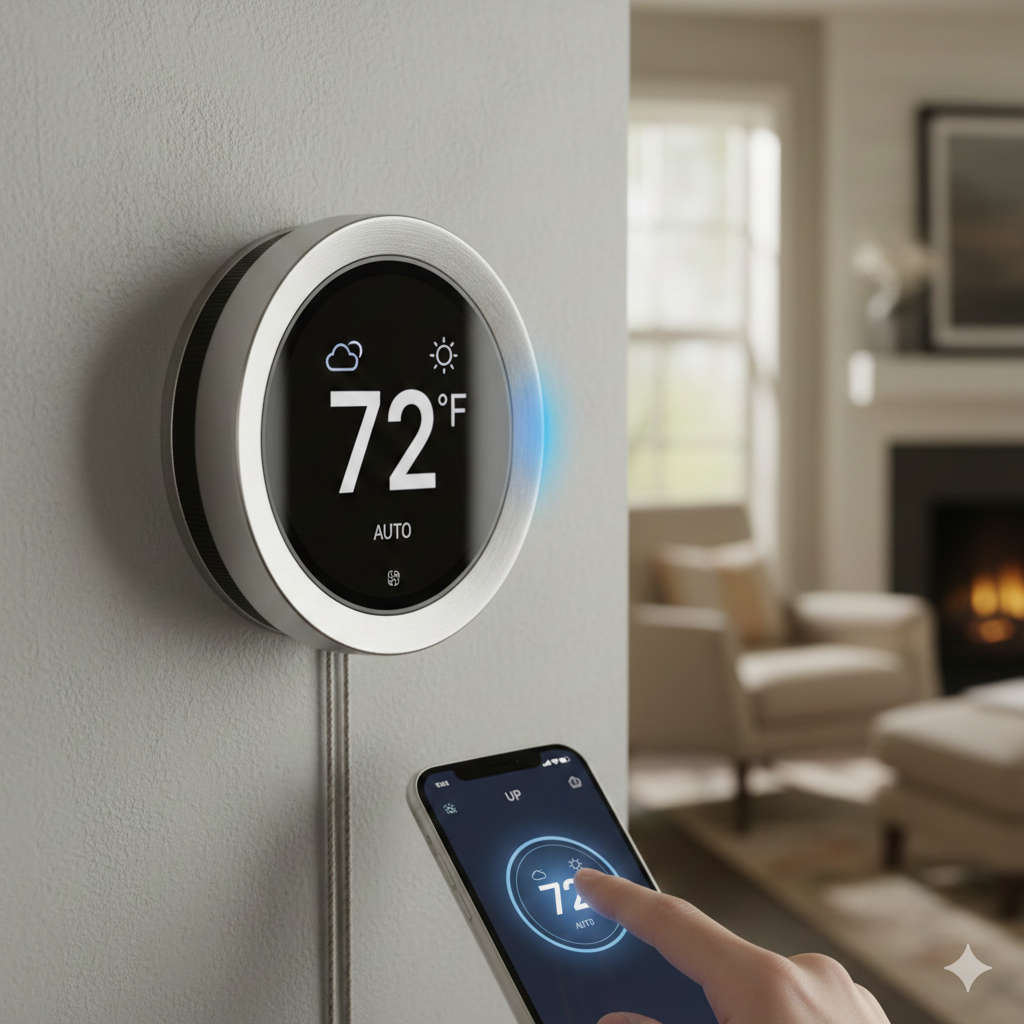
Imagine stepping into a home that feels just right. It’s warm on a chilly winter evening, cool on a summer afternoon, and fresh year-round—all without lifting a finger. For Apple users, this dream home is powered by one crucial device: a smart thermostat that speaks the language of HomeKit.
This isn’t about adjusting temperatures from your phone. It’s about creating a living environment that thinks for itself, respects your privacy, saves you money, and works so seamlessly you forget it’s there until you walk into that perfect atmosphere. That’s the promise of the 2026 lineup of HomeKit-compatible Smart Thermostats.
I’ve spent years testing smart home gadgets. The leap we’ve seen is astonishing. Smart Thermostats have evolved from simple programmable devices into intelligent home managers that learn your life, protect your air, and even talk to your solar panels.
In this guide, I’ll walk you through everything you need to know about choosing the right HomeKit thermostat for your home in 2026. We’ll look beyond the specifications to what really matters: how these devices feel to live with day after day.
Why HomeKit Compatibility Is Non-Negotiable in 2026
Let’s be honest—you could buy any smart thermostat. So why insist on HomeKit compatibility? After living with both standalone and ecosystem-integrated devices for years, I can tell you the difference isn’t just technical—it’s experiential.
Privacy You Can Actually Feel
Remember when smart devices felt a little… creepy? Like they were always listening? HomeKit devices operate differently. They process most information right in your home—through your Apple TV, HomePod, or iPad—instead of sending your daily routines to distant servers. When you tell Siri you’re feeling warm, that information stays between you and your home. This local processing means faster responses and genuine peace of mind. Your comfort patterns remain private, not packaged as data for advertisers.
Everything Works Together—Finally
If you’ve ever struggled with different apps for lights, locks, and temperatures, you’ll appreciate HomeKit’s single-app approach. The Apple Home app becomes your command center. Better yet, everything understands Siri. You don’t need to remember brand-specific commands—just say what you want naturally. “Hey Siri, make the living room feel like a spring morning” just works. This cohesion transforms your smart home from a collection of gadgets into a unified experience.
Your Home Actually Learns Your Life
The latest HomeKit features in 2026 bring genuine intelligence. Your ecosystem can notice patterns: “You usually turn up the heat when you start cooking dinner” or “You prefer it cooler on weekends.” It can check your calendar and the weather. Your home transitions from responding to commands to anticipating your needs.
What Really Matters in Today’s Smart Thermostats
Before we dive into specific models, let’s talk about what actually makes a difference in daily living. Through testing dozens of devices, I’ve found these factors matter most:
- True Learning vs. Simple Programming: Does it just follow a schedule, or does it notice when you work from home versus travel?
- Health and Comfort Features: Temperature is just one part of comfort. Humidity, air quality, and even lighting affect how your home feels.
- Energy Savings That Add Up: A good thermostat should pay for itself. Look for features that work with time-of-use utility rates, solar power systems, or energy-saving programs.
- Beautiful, Intuitive Design: You’ll look at and interact with this device daily. It should feel like a natural part of your home.
With these principles in mind, let’s explore the top contenders for 2026.
The 2026 HomeKit Thermostat Lineup: Real-World Reviews
Ecobee Smart Thermostat Premium: The Thoughtful Whole-Home Manager
The Experience: Living with the Ecobee feels like having a considerate home manager. It doesn’t just control temperature—it oversees your home’s entire climate personality. The included remote sensors are the secret sauce. Place one in your bedroom, one in your home office, and one in the living room. The thermostat creates a comfort map of your home, prioritizing occupied rooms.
What Makes It Special:
The air quality monitoring genuinely surprised me. During a weekend painting project, the Ecobee detected rising VOC levels and automatically increased ventilation. It sent a notification explaining what was happening and what it was doing about it.
For homeowners with solar panels or variable electricity rates, the energy management features are exceptional. On sunny afternoons, the Ecobee can “pre-cool” your home using solar power, creating a thermal buffer that reduces evening air conditioning use.
HomeKit Integration Perfection:
Siri commands feel natural: “Hey Siri, warm up the upstairs.” In the Home app, you see not just temperature but occupancy from each sensor. Creating automations is powerful: “When everyone leaves, set to Away mode and turn on security cameras.”
Consider This If: You want the most comprehensive climate management system, have multiple rooms with different needs, and value air quality monitoring.
Google Nest Learning Thermostat: The Beautiful, Adaptable Classic
The Experience: The Nest remains what I recommend to friends who value design and simplicity. Its circular interface is instantly recognizable and surprisingly delightful. The display lights up as you approach, showing not just temperature but helpful icons.
What Makes It Special:
Nest’s learning algorithm feels less like programming and more like training a helpful assistant. After about a week of manual adjustments, it begins to notice patterns. What I appreciate most is how it learns your home’s thermal personality.
A feature I didn’t know I needed: HVAC health monitoring. My Nest once alerted me that my furnace was taking longer than usual to reach temperature. A service check revealed a minor issue before it became a major repair.
HomeKit Harmony:
Thanks to Matter support, adding Nest to HomeKit is now straightforward. It appears in the Home app with full functionality. The experience feels unified. You can use Siri naturally or continue using Google Assistant if you prefer.
Consider This If: Beautiful design matters to you, you want a thermostat that learns without complex programming, or you live in a mixed-ecosystem household.
Honeywell Home T10 Pro: The Wellness-Focused Specialist
The Experience: This thermostat surprised me with its focus on how environment affects wellbeing. If you have specific health considerations like allergies, asthma, or sleep issues, the T10 Pro offers thoughtful features.
What Makes It Special:
The wellness integration with Apple Health (with your explicit permission) is genuinely innovative. The thermostat can notice correlations—perhaps you sleep better when the bedroom is slightly cooler and more humid. It can then suggest and implement these conditions automatically.
It’s also brilliant with humidity management. Living in a climate with humid summers, I appreciated how it prioritized dehumidification, making warmer temperatures feel more comfortable.
HomeKit Integration:
In the Home app, it appears as multiple accessories—temperature, humidity, and air quality controls separately. This allows precise automations: “When humidity exceeds 60%, activate dehumidification mode.”
Consider This If: You have radiant floor heating, prioritize sleep quality and wellness, or live in a climate with humidity extremes.
Aqara Thermostat E1: The Budget-Friendly Powerhouse
The Experience: Here’s the thermostat I recommend to smart home beginners or anyone on a sensible budget. The Aqara delivers remarkable capability at a price that feels almost unfair to competitors.
What Makes It Special:
The value proposition is extraordinary. For the price of a basic thermostat, you get HomeKit compatibility, Thread radio for better connectivity, and a design that looks more expensive than it is. The detachable design is clever—mount the base permanently, then carry the control unit room to room.
It works beautifully with other Aqara sensors. Pair it with a door/window sensor, and create an automation: “When the back door is open for more than five minutes, pause the air conditioning.” These practical automations deliver real energy savings.
HomeKit Integration:
As a native Thread device, response times in the Home app are instant. Setup takes minutes. For someone building their first smart home, it’s an accessible entry point that doesn’t feel like a compromise.
Consider This If: You’re new to smart homes, want maximum features for minimum investment, or need several thermostats for different zones.
Installation Made Simple: What to Expect in 2026
If you’re hesitating because you’ve heard installation horror stories, let me reassure you—it’s gotten much easier. Most homes with standard HVAC systems support straightforward DIY installation. Manufacturers provide excellent video guides, compatibility checkers, and customer support.
The Matter standard has been a game-changer. Adding a Matter-certified thermostat to HomeKit is now as simple as:
- Turning off power to your HVAC system
- Taking a picture of your existing wiring
- Following the guided app installation
- Scanning the Matter QR code with your iPhone
- Letting HomeKit automatically configure everything
For complex systems (homes with multiple heating stages, heat pumps, or zoning systems), I still recommend professional installation. Many HVAC companies now offer “smart home” installation services. The peace of mind and correct configuration are worth the investment.
Beyond Temperature: The Future of Home Climate
As we look toward the rest of this decade, smart thermostats are evolving in exciting directions:
Integration with Renewable Energy
Future thermostats will communicate directly with home solar systems, batteries, and even electric vehicles. Imagine your thermostat knowing your EV will charge overnight and scheduling home heating to use that lower-rate electricity.
Predictive Health Support
We’re seeing early signs of thermostats that can help manage health conditions—maintaining ideal conditions for asthma sufferers, optimizing sleep environments based on wearable data, or creating comfortable spaces for recovery.
Community Energy Networks
Some utilities are piloting programs where homes work together as virtual power plants. Your thermostat might slightly adjust during peak demand not just for your savings, but to help stabilize the broader grid.
Choosing Your Perfect Match: A Simple Guide
Still unsure which thermostat fits your life? Ask yourself these questions:
What’s your priority?
- Whole-home intelligence and air quality: Ecobee
- Beautiful design and effortless learning: Nest
- Wellness optimization and precise control: Honeywell
- Maximum value and easy start: Aqara
What’s your home like?
- Single-zone, standard system: Any will work beautifully
- Multiple floors/rooms with different needs: Ecobee with sensors
- Rental property: Aqara (affordable, detachable, landlord-friendly)
The Bottom Line: Comfort That Thinks Ahead
The right smart thermostat does more than control temperature—it creates an environment that supports how you want to live. It saves money without sacrificing comfort. It protects your family’s health through better air quality. It respects your privacy while offering remarkable convenience.
In 2026, the best choice isn’t necessarily the most expensive or feature-packed model. It’s the one that fits seamlessly into your life, understands your home’s unique personality, and works reliably day after day.
For most Apple users, that means choosing a thermostat designed with HomeKit at its core. The integration isn’t just a feature—it’s the foundation of an experience where your technology works together so well, you can forget about it and simply enjoy being home.
Take your time, consider what matters most in your daily life, and choose the thermostat that will welcome you home to perfect comfort—today, tomorrow, and for years to come.
You might also like,