
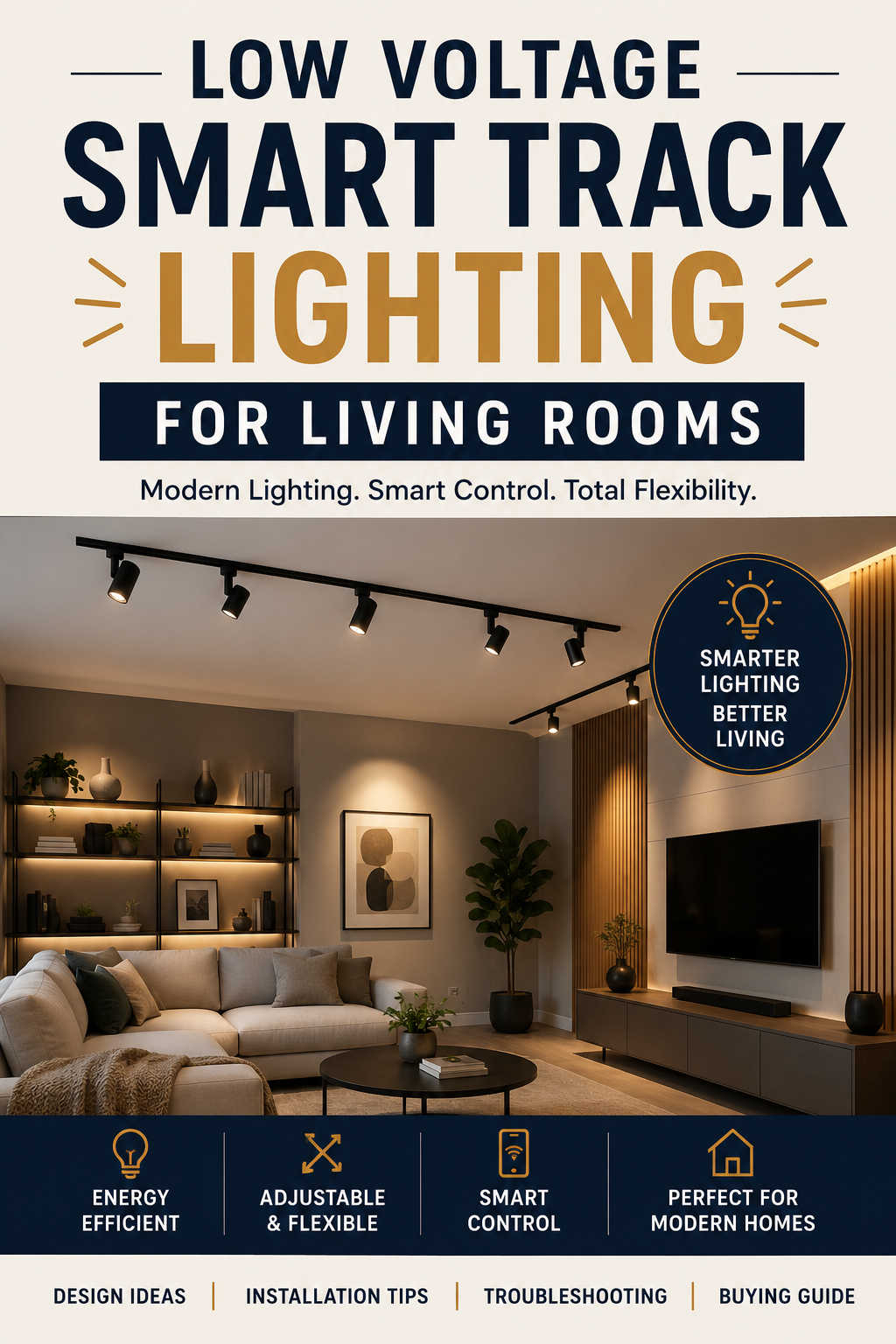
Lighting has the power to completely transform a living room. It influences how comfortable a space feels, highlights your favorite design features, and even affects how you use the room throughout the day. While traditional ceiling fixtures still have their place, many homeowners are now choosing low voltage smart track lighting for its combination of modern design, energy efficiency, and intelligent controls.
Unlike fixed ceiling lights, smart track lighting gives you the freedom to direct light exactly where it’s needed. Add smart features such as app control, voice commands, and customizable lighting scenes, and you have a system that adapts to your lifestyle rather than forcing you to adapt to it.
Whether you’re renovating your home or simply looking for a more versatile lighting solution, this guide explains how low voltage smart track lighting works, its advantages, installation considerations, maintenance tips, and how to solve common issues.
What Is Low Voltage Smart Track Lighting?
Low voltage smart track lighting is a lighting system that distributes power through a mounted track while using a transformer to reduce standard household voltage to a much lower operating voltage, commonly 12V, 24V, or 48V. Individual light fixtures attach to the track and can be repositioned, rotated, or tilted whenever your lighting needs change.
The “smart” element comes from built-in wireless connectivity. Depending on the system, you can control the lights using a smartphone app, voice assistants, wireless remotes, or compatible smart home platforms. Many models also support automation, allowing the lights to adjust automatically according to schedules or routines.
This combination of flexibility and intelligent control makes low voltage smart track lighting particularly well suited for modern living rooms where one space often serves multiple purposes—from relaxing and watching movies to entertaining guests or working from home.
Why More Homeowners Are Choosing Low Voltage Smart Track Lighting
The growing popularity of low voltage smart track lighting isn’t simply about following interior design trends. It addresses many of the limitations of conventional lighting while offering greater control over both appearance and performance.
Because the fixtures operate with energy-efficient LED technology, they consume far less electricity than older incandescent or halogen lighting. LEDs also generate significantly less heat, making them more comfortable and safer for everyday use while extending the lifespan of the lighting system.
Another major advantage is flexibility. Instead of being locked into a single ceiling fixture, you can easily reposition individual lights along the track or redirect them toward artwork, bookshelves, seating areas, or architectural features. If you rearrange your furniture later, your lighting can change with it—without requiring new electrical work.
The addition of smart controls makes daily use even more convenient. You can dim the lights for movie night, brighten the room for cleaning, or create personalized lighting scenes with a simple voice command or a tap on your phone.
How Smart Track Lighting Improves Living Room Design
Lighting should do more than simply brighten a room. A well-designed lighting plan adds depth, creates atmosphere, and makes the entire space feel more inviting.
Low voltage smart track lighting supports this layered approach exceptionally well because each fixture can serve a different purpose while remaining part of the same streamlined system.
Ambient Lighting for Everyday Comfort
Ambient lighting provides the general illumination that fills the room. Instead of relying on a single central fixture, multiple track lights spread illumination more evenly throughout the space.
Many smart systems allow you to adjust brightness throughout the day. A brighter setting works well during morning activities, while lower light levels create a more relaxing atmosphere in the evening.
Accent Lighting That Highlights Your Home
Accent lighting draws attention to specific features within your living room.
Track fixtures can be aimed toward:
- Artwork
- Decorative shelving
- Indoor plants
- Fireplaces
- Textured walls
- Display cabinets
This focused lighting adds visual depth and creates a more professionally designed appearance without requiring additional fixtures.
Task Lighting for Everyday Activities
Modern living rooms often serve several functions beyond relaxation. Whether you’re reading, working remotely, or helping children with homework, targeted lighting makes these activities more comfortable.
Adjustable track heads can direct brighter light exactly where it’s needed while leaving the rest of the room softly illuminated.
Smart Features That Make Everyday Life Easier
One of the biggest reasons homeowners upgrade to smart lighting is convenience. Rather than simply switching lights on and off, today’s systems provide extensive customization.
Dimming controls let you adjust brightness to match different moods or activities. Instead of installing multiple fixtures, a single lighting system can create everything from bright daytime illumination to soft evening ambiance.
Many systems also offer tunable white lighting. This allows you to change the color temperature between warm white, neutral white, and cool white. Warm lighting creates a cozy environment that’s ideal for relaxing, while cooler lighting improves visibility for reading, cleaning, or working.
Higher-end systems may also include RGB color control, giving you access to millions of colors for parties, holidays, or entertainment spaces. While colorful lighting isn’t essential for every home, it offers another level of personalization for those who enjoy changing the atmosphere.
Automation adds even more convenience. You can schedule lights to turn on before you arrive home, gradually dim before bedtime, or activate preset scenes for activities such as watching television or hosting guests.
Energy Efficiency and Long-Term Savings
Energy efficiency is one of the strongest arguments for switching to low voltage smart track lighting.
LED technology consumes significantly less electricity than traditional lighting while producing excellent brightness. Because LEDs convert more electrical energy into light instead of heat, they waste less power and remain cooler during operation.
Over time, this lower energy consumption can reduce electricity bills, particularly in homes where living room lights remain on for several hours each day.
LED fixtures also have impressively long service lives. Many quality products are rated to operate for tens of thousands of hours before noticeable brightness reduction occurs. This means fewer replacements, lower maintenance costs, and less inconvenience over the lifetime of the lighting system.
Choosing the Right Low Voltage Smart Track Lighting System
Not every lighting system is designed for the same type of home. Before making a purchase, it’s worth considering how the system will fit your room, your lifestyle, and your existing smart home setup.
Room Size and Layout
Larger living rooms usually benefit from longer track runs or multiple interconnected tracks. This allows light to be distributed evenly instead of concentrating brightness in one area.
Smaller rooms often require fewer fixtures, making a compact track system both practical and visually balanced.
Ceiling Height
Ceiling height influences beam angle selection.
Higher ceilings often benefit from narrower beams that focus light where it’s needed, while lower ceilings typically work better with wider beams that spread illumination more evenly across the room.
Smart Home Compatibility
If you already use smart home devices, check that the lighting system integrates with your preferred platform. Choosing compatible products allows your lighting to work seamlessly alongside smart speakers, routines, and other connected devices.
Transformer Capacity
Because low voltage systems rely on transformers, it’s important to select one that comfortably supports the total wattage of all installed fixtures. Leaving some additional capacity also makes it easier to expand the system in the future without replacing the transformer.
Common Problems with Smart Track Lighting and How to Fix Them
Even well-designed lighting systems occasionally experience issues. Fortunately, many common problems have straightforward solutions once you understand their causes.
Lights Won’t Turn On
If none of the fixtures are working, begin by checking the electrical supply, transformer, and circuit breaker.
A tripped breaker or disconnected transformer prevents power from reaching the track. Restoring power often resolves the issue immediately without replacing any components.
If only one fixture isn’t working, remove it and reinstall it securely on the track. Track heads sometimes lose proper electrical contact if they become slightly misaligned.
Smart Controls Stop Responding
Occasionally, the lights may stop responding to your smartphone or voice assistant.
This often happens after changes to your Wi-Fi network, router settings, or firmware updates. Reconnecting the lighting system to your home network usually restores communication because the controller can once again identify the correct wireless connection.
Restarting both the lighting hub and your router can also resolve temporary communication problems by refreshing the network connection.
Flickering Lights
Flickering usually indicates an electrical compatibility issue rather than a defective LED.
Loose electrical connections, incompatible dimmer switches, overloaded transformers, or aging LED drivers can all interrupt the steady flow of electricity, causing visible flickering.
Inspecting wiring connections, ensuring compatible dimmers are used, and verifying that the transformer isn’t overloaded often eliminates the problem before any parts need replacement.
Uneven Brightness
If some fixtures appear brighter than others, the issue may stem from different beam angles, varying color temperatures, or inconsistent fixture placement.
Repositioning the lights and using matching fixtures throughout the system helps create more balanced illumination across the room.
Installation Tips for the Best Results
A thoughtful installation makes a significant difference in both appearance and performance.
Rather than placing the track directly in the center of the room by default, consider how your furniture is arranged and where lighting is actually needed. Positioning the track slightly closer to seating areas, artwork, or feature walls often produces a more attractive result.
Planning multiple lighting layers before installation also helps avoid dark corners or overly bright sections. Combining ambient, accent, and task lighting within the same track system creates a more comfortable and visually interesting living space.
If you’re installing a hardwired system and aren’t comfortable working with household electrical wiring, hiring a qualified electrician is the safest approach. Proper installation ensures reliable operation while protecting both the lighting system and your home’s electrical infrastructure.
Simple Maintenance for Long-Lasting Performance
One of the advantages of LED-based smart track lighting is its minimal maintenance requirements.
Dust gradually accumulates on fixtures and lenses, reducing light output over time. Cleaning the fixtures with a soft, dry cloth every few months helps maintain maximum brightness while preserving their appearance.
It’s also worth checking that each fixture remains securely attached to the track, particularly if lights are frequently repositioned.
For smart-enabled systems, installing firmware updates through the manufacturer’s app can improve stability, introduce new features, and resolve software-related issues. Keeping both the app and lighting firmware up to date helps ensure reliable performance for years to come.
Is It Worth Upgrading to Low Voltage Smart Track Lighting?
For many homeowners, upgrading is a worthwhile investment, especially when replacing older halogen or incandescent lighting.
If your current living room lighting feels outdated, lacks flexibility, or consumes excessive electricity, a smart low voltage system offers meaningful improvements in both functionality and efficiency. The ability to customize brightness, automate schedules, and reposition fixtures creates a more adaptable living space that evolves with your needs.
However, if your existing LED lighting already performs well and meets your expectations, replacing it immediately may not be necessary. The greatest value comes when you’re renovating, redesigning your living room, or planning a broader smart home upgrade.
By evaluating your current lighting, energy usage, and desired features, you can determine whether the additional flexibility and smart functionality justify the investment.
Final Thoughts
Low voltage smart track lighting combines modern aesthetics, energy-efficient LED technology, and intelligent controls into a single lighting solution that’s both practical and stylish. Its adjustable fixtures, customizable brightness, and smart automation make it easy to create the right atmosphere for everything from quiet evenings to family gatherings.
The best results come from careful planning. Choosing the right track layout, selecting compatible smart features, and understanding how to troubleshoot common issues will help you get the most from your investment while avoiding unnecessary frustration.
If you’re looking for a lighting system that offers flexibility, long-term energy savings, and a cleaner, more contemporary look than traditional ceiling fixtures, low voltage smart track lighting is well worth considering. With proper installation and routine maintenance, it can enhance both the appearance and functionality of your living room for many years to come.