
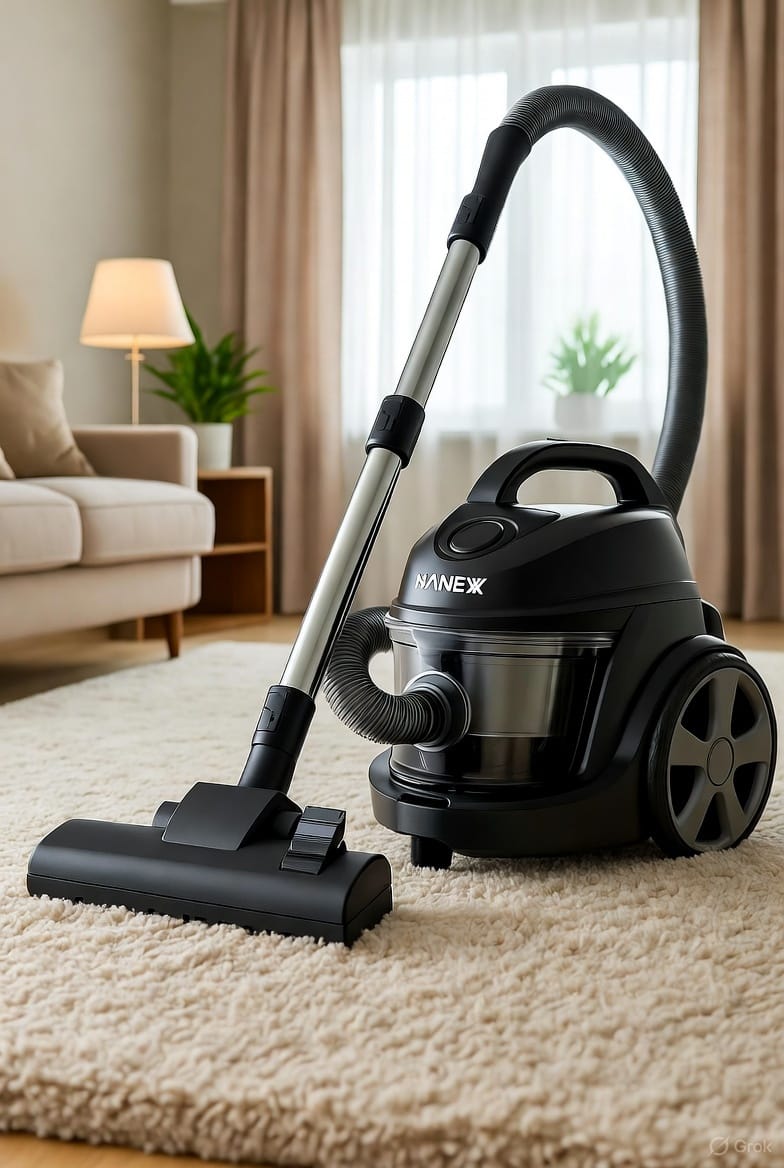
Anyone who’s tried to clean a thick shag rug or a plush wool carpet with a lightweight cordless vacuum knows the frustration. The head glides over the top, the indicator light stays green, and yet somehow the carpet still looks dull and full of trapped dust once you’re done. Deep pile doesn’t behave like a normal floor. Dirt and hair work their way down into the base of the fibres, well below where most modern machines are actually designed to reach.
This is where bagged cylinder vacuums quietly continue to earn their keep. They’re not fashionable, and they don’t get the marketing budget that cordless stick vacuums do, but for households with genuinely thick carpet, they’re often still the more sensible purchase. This guide covers what makes deep pile carpet different to clean, which features actually matter when shopping for a bagged cylinder model, a handful of machines worth considering in 2026, and — just as importantly — when it’s actually worth replacing the vacuum you already own rather than buying a new one out of habit.
Why Deep Pile Carpet Is Harder to Clean Than It Looks
Low-pile and flat-weave carpets mostly hold dirt near the surface, which is exactly the kind of job cyclonic bagless vacuums handle well. Deep pile is a different story. The long fibres act almost like a filter themselves, pulling dust, skin flakes and pet hair down toward the backing where a quick pass with a stick vacuum barely touches it.
That extra volume of fine debris tends to be the undoing of bagless machines on thick carpet. Cyclones and mesh filters that cope fine on hard floors can clog partway through a session, and suction drops off right when the carpet needs it most. A bagged system avoids most of that problem simply because everything goes straight into a sealed paper bag rather than a chamber that has to separate air from dust as it moves. Airflow tends to stay far more consistent from the first minute of cleaning to the last.
There’s a practical hygiene angle too. Emptying a dust-caked cyclone bin means tipping fine particles out by hand, and some of that inevitably ends up back in the air. A sealed bag skips that step entirely — you pull it out, seal it, and bin it without touching what’s inside. For anyone in the household with allergies or asthma, that difference is often more noticeable day to day than any spec on a box.
Then there’s the question of stamina, both the vacuum’s and yours. Deep pile carpet usually needs two or three unhurried passes over the same patch to lift dirt that’s settled near the base of the fibres. A corded machine never has to worry about a battery meter counting down mid-clean, which matters more than it sounds like it should once you’re halfway through a large lounge.
What to Check Before You Buy
Not every vacuum labelled “bagged cylinder” is genuinely suited to thick pile. A few specifics separate the machines that actually cope from the ones that struggle:
- A motorised or turbo brush head. Suction alone rarely lifts embedded dirt out of long fibres — the pile needs to be physically agitated. A basic floor tool with no moving parts will mostly glide across the surface.
- A reasonably large bag. Look for 3.5 litres or more if you’re cleaning a fully carpeted home. Smaller bags fill quickly, and performance tends to drop off well before a bag is technically full.
- Sealed, high-quality filtration. HEPA or equivalent filtration keeps fine dust properly contained rather than pushed back into the room, which matters more on carpet than on hard flooring simply because carpet traps so much more of it.
- A pile-height adjustment. Being able to raise the brush head slightly on deep pile stops the motor from labouring and prevents the head catching or dragging.
- Enough cable and hose to actually reach. A 10-metre cable with a flexible hose cuts down on how often you’re unplugging and replugging in bigger rooms — a small thing, but one that adds up over a full clean.
Bagged Cylinder Vacuums Worth Considering for Deep Pile Carpet
None of the machines below is objectively “the best” in every situation — the right one really depends on how much carpet you have, your budget, and whether pets are part of the household. Here’s how a handful of well-regarded options compare.
Miele Guard M1 Cat & Dog
This model has quietly become one of the more trusted recommendations among people who clean carpets for a living, and it’s easy to see why. Suction holds up well on both carpet and hard flooring, and the included Turbobrush attachment does a genuinely good job of pulling pet hair out of thick pile rather than just skating over it. A 4.5-litre bag means you’re not changing it constantly, and small details — foot-operated controls, a bag-sealing mechanism that doesn’t leak dust when you swap it — make it a pleasant machine to actually live with.
It’s heavier than most cordless alternatives and sits at a premium price point, so it makes the most sense for households that vacuum a lot of carpet regularly and would rather invest once than replace a cheaper machine every couple of years.
Miele Guard L1 Cat & Dog
The standout feature here is a compacting bin mechanism that presses debris down as it fills, which means a single bag can often last close to a month in an average household. On deep pile, it’s been consistently praised for lifting dust from long fibres just as effectively as it deals with everyday spills on hard floors. A small LCD display tracks filter life and maintenance reminders, which removes some of the guesswork that comes with most cylinder vacuums.
This is a good fit if changing bags is something you’d rather think about as little as possible. It’s less essential if you’ve only got carpet in one or two rooms, where a smaller-capacity model would likely serve just as well for less money.
SEBO Airbelt D4
If your priority is pure cleaning performance on high-pile carpet, the SEBO Airbelt D4 tends to come out near the top of independent testing, often outperforming considerably pricier cordless flagships in the process. SEBO builds these machines to something closer to commercial-grade durability, and that shows up in how well suction holds as the bag fills — a point where cheaper cylinders often start to struggle.
It’s a serious investment, so it suits homes with a lot of deep pile carpet throughout, where the performance gain is actually noticeable day to day. For a single room or occasional use, it’s probably more machine than most people need.
Henry HVR 200-11
Henry vacuums have been a fixture in British homes for decades, and the HVR 200-11 sticks to that same no-nonsense formula: no cyclone to maintain, just steady suction from a straightforward motor. Its 9-litre bag is built for long, continuous cleaning sessions rather than quick top-ups, and a 10-metre cable paired with HEPA-compatible filtration means fewer trips back to the plug socket in larger rooms.
It doesn’t come with a motorised brush bar as standard, so very thick or heavily textured rugs may need an extra pass to get properly clean. That said, for anyone who wants dependable, low-maintenance cleaning without paying premium prices, it remains one of the more trusted names in UK cleaning cupboards.
Miele Guard S1 Electro
Sitting a step below the M1 and L1 in Miele’s range, the S1 Electro offers the same sealed-bag reliability and build quality in a lighter, more affordable package. It’s a sensible option for households that want Miele’s dependability on deep pile without paying flagship pricing, as long as you don’t need the largest bag capacity or the most heavy-duty pet-hair attachments.
When Is It Actually Worth Upgrading or Replacing Your Vacuum?
It’s easy to assume a new vacuum will automatically clean better, but that’s not always true — and a working machine doesn’t necessarily need replacing just because a newer model exists. A few signs are worth paying attention to before you spend money:
- Suction has visibly weakened even with a fresh bag and clean filter. If you’ve swapped the bag, washed or replaced the filter, and cleaning performance still hasn’t improved, the motor or seals are likely wearing out rather than something being blocked.
- You’re going through bags much faster than you used to. This can point to a worn seal letting extra air in, which forces the motor to work harder and fills bags with less actual debris collected.
- Your current machine has no motorised brush head and your carpet has gotten thicker or shaggier. If you’ve moved house, added a new rug, or simply notice dirt sitting on top of the pile rather than being lifted out, a machine built for deep pile specifically will likely make a real difference.
- Repairs are starting to cost more than a mid-range replacement. Cylinder vacuums, particularly from brands like Miele and SEBO, are often designed to be serviced rather than replaced. If a repair quote is a small fraction of a new machine’s price, it’s usually worth fixing rather than upgrading.
- You’re cleaning significantly more carpet than you used to. A vacuum that was perfectly adequate for a small flat might genuinely struggle to keep up with a larger, fully carpeted family home, regardless of how well it was maintained.
If none of these apply, it’s usually more cost-effective to service or lightly upgrade parts of your current machine — a new brush head or filter, for example — rather than replace it outright.
Matching a Vacuum to Your Home
For a home that’s mostly deep-pile wool carpet, or has a thick shag rug in one or two key rooms, the Miele Guard M1 or L1 tends to be the safer long-term choice, since the sealed bag and Turbobrush combination is genuinely built with that fibre depth in mind. If you’re covering a large stretch of high-pile carpet throughout the house, the extra cost of the SEBO Airbelt D4 is easier to justify given how consistently it performs in testing. And if your priority is dependable, low-fuss cleaning without a large outlay, the Henry HVR 200-11 remains hard to beat.
Frequently Asked Questions
Is a bagged vacuum better than bagless for deep pile carpet? In most cases, yes. Bagged vacuums tend to hold suction more consistently as they fill and avoid the mid-clean clogging that cyclonic bagless bins are prone to on thick fibres. Bagless machines still do a good job on hard floors and low-pile carpet — it’s specifically deep pile where bagged systems tend to have the edge.
What bag capacity should I look for in a vacuum for thick carpet? Aim for at least 3.5 litres if most of your home is carpeted. Smaller bags fill up quickly, and suction usually starts to weaken once a bag is around two-thirds full, well before it’s completely packed.
Do I need a motorised brush head for deep pile carpet? Generally, yes. Suction on its own often isn’t enough to lift dirt and hair that has settled deep into long fibres. A motorised or turbo brush head physically agitates the pile, which makes a noticeable difference to how much debris actually comes up.
Are corded bagged vacuums better than cordless for large carpeted homes? For bigger homes with a lot of carpet, corded models have a clear practical edge: there’s no run-time limit to work around. Deep pile often needs several slow passes to clean properly, and a cordless vacuum’s battery can run low before the job’s finished.
How often should I replace the vacuum bag? Most manufacturers suggest changing the bag once it’s around two-thirds full rather than waiting until it’s completely packed, since suction weakens noticeably before that point. In a fully carpeted home, that usually works out to roughly once a month, though it varies with how much you vacuum.
How do I know if I should replace my vacuum rather than repair it? As a rough guide, if a repair costs a small fraction of a new machine’s price, it’s usually worth fixing — especially with cylinder vacuums built to be serviced. Replacement makes more sense when suction has weakened permanently despite fresh bags and filters, when your carpet has changed significantly since you bought the machine, or when running costs (bags, filters, repairs) are adding up faster than a new model would.
Which bagged cylinder vacuum is best for pet hair on carpet? The Miele Guard M1 and L1 stand out here, largely thanks to their Turbobrush attachments, which are designed specifically to lift hair out of carpet fibres rather than just pushing it around the surface.
The Bottom Line
Cordless and bagless vacuums have taken over most of the market, and for good reason — they’re convenient for everyday cleaning. But deep pile carpet is one of the few jobs where a bagged cylinder vacuum still has a genuine, measurable advantage. Consistent suction, properly sealed filtration, and unlimited run time all matter more on thick pile than they do on hard floors or shallow carpet, and in 2026, brands like Miele, SEBO and Henry are still building machines that prove it. Just as importantly, don’t assume you need a new one until your current machine actually shows the signs above — sometimes a fresh filter and a good service will do the job just as well.