
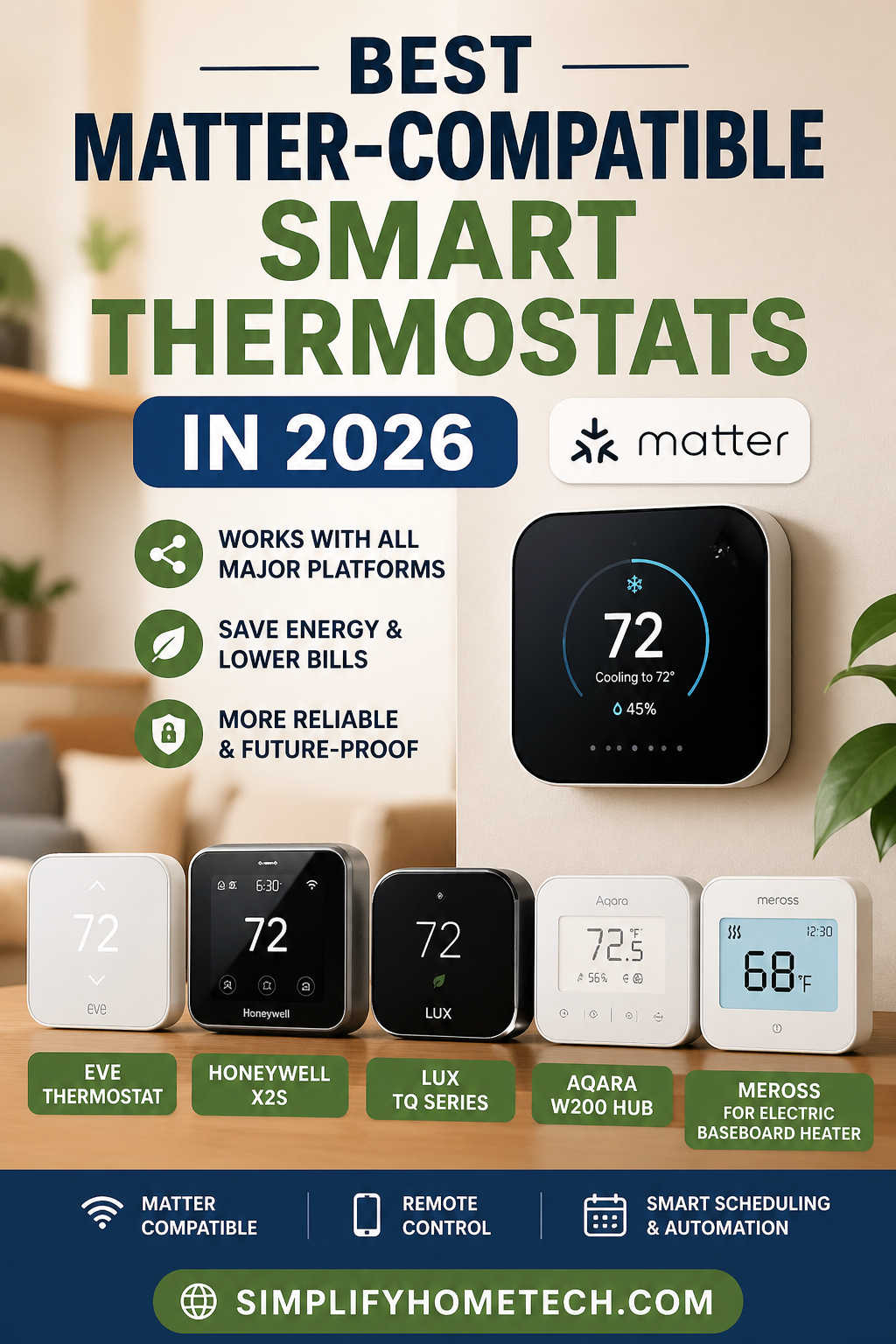
Smart home technology has evolved rapidly over the past few years, but 2026 marks a turning point. The rise of the Matter standard has transformed how devices communicate, eliminating the frustration of incompatible ecosystems. One category where this change is especially noticeable is smart thermostats.
If you’re planning to upgrade your home’s heating or cooling system, choosing a Matter-compatible thermostat is one of the smartest decisions you can make. These devices are no longer just about adjusting temperature remotely—they now offer intelligent automation, energy savings, and seamless integration across platforms.
This guide explores everything you need to know, from how Matter works to the best smart thermostats available in 2026, along with practical advice to help you choose the right one.
Understanding Matter and Why It Matters for Thermostats
Matter is a universal smart home standard developed to simplify connectivity between devices. Before Matter, users often had to choose between ecosystems like Apple Home, Google Home, or Amazon Alexa. Each system had its own compatibility requirements, making it difficult to mix and match devices.
With Matter, that problem is largely solved.
A Matter-enabled thermostat can:
- Work across multiple platforms simultaneously
- Be controlled locally without relying entirely on cloud servers
- Offer faster response times and improved reliability
- Simplify setup using a single QR-based onboarding process
For homeowners, this means fewer headaches and more flexibility. You’re no longer locked into one brand or ecosystem, and your devices are more likely to remain compatible in the future.
Why You Should Upgrade to a Matter Thermostat in 2026
If you’re still using a traditional programmable thermostat—or even an older smart thermostat—there are several compelling reasons to upgrade.
Seamless Cross-Platform Integration
Matter devices are designed to work with all major smart home systems. Whether you prefer voice control through Alexa, automation via Google, or Apple’s ecosystem, your thermostat will integrate smoothly.
Improved Reliability
Many Matter devices use local communication protocols like Thread. This reduces dependency on internet connectivity, meaning your thermostat can continue functioning even during outages.
Energy Efficiency and Cost Savings
Modern thermostats are far more intelligent. They learn your habits, adjust temperatures automatically, and help reduce unnecessary energy usage. Over time, this can lead to noticeable savings on utility bills.
Future-Proofing Your Smart Home
Technology evolves quickly. Investing in Matter-compatible devices ensures your setup stays relevant as new features and platforms emerge.
Key Features to Look for in a Matter Smart Thermostat
Choosing the right thermostat isn’t just about brand recognition. You need to evaluate features that align with your home and lifestyle.
Connectivity Options: Thread vs Wi-Fi
Thread is a low-power mesh networking protocol designed for smart homes. It offers faster communication and better reliability compared to traditional Wi-Fi connections. However, Wi-Fi thermostats are often easier to install and may not require additional hubs.
HVAC Compatibility
Not all thermostats work with every heating and cooling system. Check whether the device supports:
- Heat pumps
- Multi-stage systems
- Electric baseboard heaters
- Radiant heating systems
Power Requirements (C-Wire)
Many smart thermostats require a C-wire for continuous power. If your home lacks one, you may need an adapter or professional installation.
Smart Features and Automation
Look for features like:
- Learning algorithms
- Geofencing
- Occupancy detection
- Remote sensors
These capabilities enhance comfort and efficiency.
Privacy and Data Control
Some thermostats rely heavily on cloud services, while others prioritize local processing. If privacy is important to you, choose a model that minimizes data sharing.
Best Matter-Compatible Smart Thermostats in 2026
Here are the top options available this year, each suited to different needs and budgets.
Eve Thermostat (2026 Edition)
The Eve Thermostat has become a favorite among users who value privacy and simplicity. It operates entirely on local networks, meaning your data stays within your home.
It uses Thread connectivity, ensuring fast and stable performance. The interface is clean and intuitive, making it easy to adjust settings without relying heavily on apps.
This thermostat is particularly appealing for users already invested in Apple’s ecosystem, but thanks to Matter, it also works with other platforms.
Best for: Privacy-focused users who want a clean, no-frills experience.
Honeywell Home X2S
Honeywell has long been a trusted name in climate control, and the X2S model continues that legacy with modern Matter support.
What sets this thermostat apart is its broad compatibility with different HVAC systems. Whether you have a complex multi-zone setup or an older heating system, the X2S is likely to work seamlessly.
It may not have the most cutting-edge design, but it excels in reliability and performance.
Best for: Homes with complex or older HVAC systems.
LUX TQ Series
For those on a budget, the LUX TQ Series offers an affordable entry point into the Matter ecosystem.
Despite its lower price, it still delivers essential smart features like remote control and scheduling. It connects via Wi-Fi, making installation straightforward for most users.
While it lacks some advanced automation features, it provides excellent value for money.
Best for: Budget-conscious buyers looking for basic smart functionality.
Aqara Thermostat Hub W200
The Aqara W200 is more than just a thermostat—it also functions as a smart home hub. This makes it an excellent choice for users who want to centralize control of multiple devices.
It supports both Thread and Wi-Fi, offering flexibility in connectivity. Additionally, it enables advanced automation scenarios, such as linking temperature changes with lighting or security systems.
Best for: Smart home enthusiasts who want deeper integration and automation.
Google Nest Learning Thermostat (4th Generation)
The Nest Learning Thermostat remains one of the most intelligent options available. It uses machine learning to understand your preferences and automatically adjust temperatures.
While Matter integration is still evolving, newer versions are increasingly compatible. The sleek design and user-friendly interface make it a popular choice for beginners.
Best for: Users who want a “set it and forget it” experience with strong automation.
meross Matter Smart Thermostat for Electric Baseboard Heater
This thermostat fills a very specific but important niche—electric baseboard heating systems, which are common in many homes and apartments.
Unlike traditional thermostats, this model is designed specifically for high-voltage systems. It supports Matter over Wi-Fi, making it accessible without requiring additional hubs.
It offers reliable scheduling, remote control, and energy monitoring, helping users manage heating costs more effectively.
Best for: Homes using electric baseboard heaters that need a modern smart upgrade.
How to Choose the Right Thermostat for Your Home
Selecting the best thermostat depends on your specific requirements.
If you prioritize privacy, go for a locally controlled device like Eve. If compatibility is your main concern, Honeywell is a safe choice. Budget buyers should consider LUX, while advanced users may prefer Aqara’s hub-based approach.
For electric heating systems, the meross thermostat is one of the few tailored options available.
Installation Tips and Considerations
Installing a smart thermostat can be straightforward, but there are a few things to keep in mind.
First, turn off power to your HVAC system before starting. This ensures safety during installation.
Second, take a photo of your existing wiring before disconnecting anything. This can save time if you need to troubleshoot.
Third, check whether your system requires a C-wire. If not, you may need an adapter.
If you’re unsure about compatibility or wiring, hiring a professional is a good investment.
Matter vs Traditional Smart Thermostats
The difference between Matter and older smart thermostats is significant.
Traditional devices often rely on proprietary ecosystems, limiting compatibility. They may also depend heavily on cloud services, which can lead to delays or outages.
Matter thermostats, on the other hand, are designed for interoperability and local control. This results in faster response times and a more reliable experience.
Trends Shaping Smart Thermostats in 2026
Several trends are influencing the development of smart thermostats this year.
Increased Focus on Privacy
More companies are offering local control options, reducing reliance on cloud storage.
Smarter Automation
AI-driven features are becoming more advanced, allowing thermostats to predict user behavior more accurately.
Integration with Energy Systems
Thermostats are increasingly working alongside solar panels, battery storage, and smart grids.
Subscription-Free Models
Users are moving away from devices that require ongoing fees, pushing manufacturers to offer full functionality upfront.
Common Mistakes to Avoid
Many buyers make avoidable mistakes when choosing a thermostat.
One common issue is ignoring HVAC compatibility. Always verify that the thermostat works with your system.
Another mistake is overlooking power requirements. Not having a C-wire can complicate installation.
Some users also focus too much on price and overlook long-term value. A slightly more expensive model with better features can save money over time.
Frequently Asked Questions
What is a Matter-compatible thermostat?
A Matter-compatible thermostat is a smart thermostat that follows the Matter standard, allowing it to work seamlessly across different smart home platforms.
Do I need a hub for Matter thermostats?
Not always. Some devices connect directly via Wi-Fi, while others use Thread and may require a compatible hub like a smart speaker.
Are Matter thermostats worth it in 2026?
Yes. They offer better compatibility, reliability, and future-proofing compared to older smart thermostats.
Can I install a smart thermostat myself?
In many cases, yes. However, if your system is complex or lacks a C-wire, professional installation may be recommended.
Which thermostat is best for electric baseboard heating?
The meross Matter Smart Thermostat is specifically designed for electric baseboard heaters and is one of the best options available.
Final Thoughts
Smart thermostats have come a long way, and Matter has taken them to the next level. In 2026, these devices are no longer just convenient—they are essential tools for improving comfort, reducing energy consumption, and simplifying smart home management.
Whether you want advanced automation, strong privacy protections, or an affordable upgrade, there is a Matter-compatible thermostat that fits your needs.
Choosing the right model comes down to understanding your home, your heating system, and your priorities. Once you make the switch, you’ll likely wonder how you ever managed without it.