
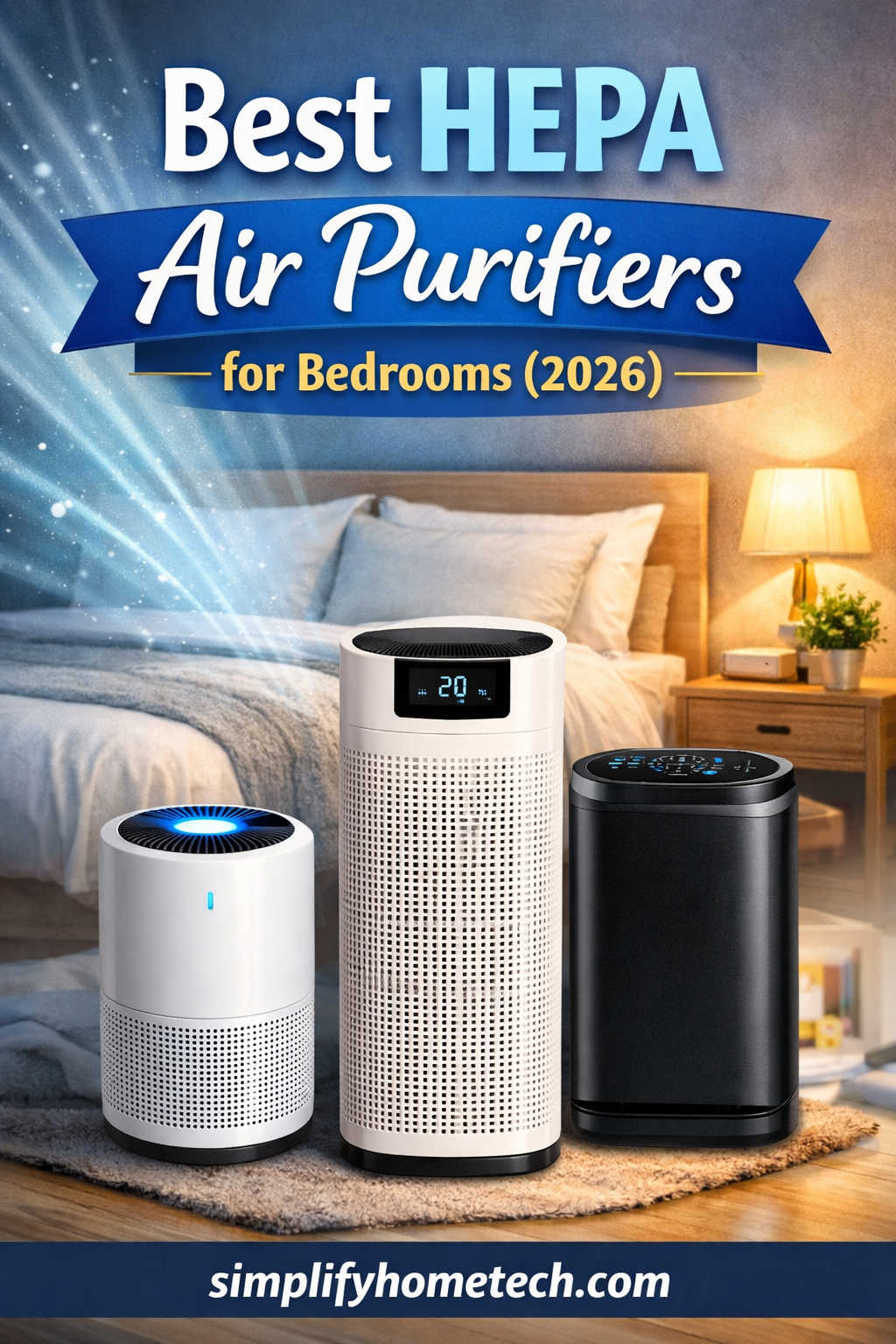
The air in your bedroom might look clean, but invisible particles often tell another story. Dust, pollen, pet dander, mold spores, and smoke residue can quietly collect over time and affect how you breathe, sleep, and feel every morning. If you’ve ever woken up congested or with irritated sinuses, your indoor air quality may be the culprit — and the solution could be simpler than you think. A HEPA air purifier is one of the most effective and affordable ways to transform your bedroom air from stale to fresh. This guide takes a deep dive into how HEPA technology works, what features actually matter in a bedroom purifier, and the best models available in 2026. Whether you’re an allergy sufferer, a light sleeper, a pet owner, or someone who just wants to breathe cleaner air while resting, you’ll find practical insights and clear recommendations here.
Why Clean Bedroom Air Matters So Much
Your bedroom is where you recharge. Ideally, it should be a sanctuary for rest and recovery. Yet, it’s also the place where pollutants accumulate easily. Soft furnishings, carpets, and bedding can trap allergens and dust. Pets contribute dander and microscopic fur. If you live in a city or near busy roads, pollutants like PM2.5 and smoke can seep in from outdoors. At night, when doors and windows are closed, the air exchange rate drops dramatically. This means particles and odors linger longer, and your respiratory system works harder to process them. Over time, that constant low-level exposure can affect sleep quality, worsen allergies, or aggravate asthma. A good HEPA air purifier combats this by constantly cycling the air in your room through dense filtration layers, capturing everything from coarse dust to ultrafine particles that your lungs would otherwise inhale. Within a few nights of use, many people notice fewer morning sniffles, reduced sneezing, and even deeper sleep thanks to easier breathing.
Understanding HEPA Filtration
HEPA stands for High-Efficiency Particulate Air. A true HEPA filter is designed to trap at least 99.97% of particles as small as 0.3 microns. To put that in perspective, a single human hair is about 70 microns wide — more than 200 times larger. HEPA filters work through a combination of interception, impaction, and diffusion. As air passes through the dense fiber mesh, particles collide with fibers and become trapped. This process is mechanical, not chemical, which means HEPA purifiers don’t produce ozone or harmful byproducts — an important point for health-conscious or sensitive individuals. However, HEPA filters only remove particulates, not gases. So while they’re excellent for dust, pollen, pet dander, mold, and smoke particles, they don’t neutralize odors, chemical fumes, or volatile organic compounds (VOCs) on their own. For that, a purifier also needs an activated carbon filter that absorbs gases and odors. In the context of a bedroom, both are ideal: HEPA handles allergens, while activated carbon keeps the air smelling fresh and free from chemical irritants.
Key Factors to Consider When Choosing a Bedroom Air Purifier
Not all air purifiers are created equal. When selecting one for your bedroom, it’s important to look beyond marketing claims and focus on a few practical factors that directly influence comfort and performance.
Room Size and CADR
The Clean Air Delivery Rate (CADR) tells you how quickly an air purifier can clean the air. It’s measured in cubic feet per minute (CFM). A higher CADR means the purifier can process more air, making it suitable for larger spaces. Match the purifier’s CADR or recommended coverage area to your bedroom’s size. As a general rule, choose a purifier rated for slightly larger rooms than yours — this ensures faster cleaning and quieter operation since you won’t have to run it at full power.
Noise Level
A purifier that hums loudly can quickly become a nuisance, especially if you’re a light sleeper. Look for models that offer sleep modes or ultra-quiet operation, ideally below 30 decibels. The gentle hum of a low-speed fan can even double as soothing white noise, but anything louder than a refrigerator may disturb your rest.
Filter Type and Availability
Always ensure the purifier uses a True HEPA filter, not “HEPA-type” or “HEPA-like” — those are marketing terms for less efficient filters. Check that replacement filters are readily available and reasonably priced. Filters usually last six to twelve months depending on usage, and consistent replacement is key to maintaining efficiency.
Energy Efficiency
Since bedroom purifiers often run continuously, energy consumption adds up. Choose models that are Energy Star certified or rated for low wattage on their quiet settings.
Light and Display Controls
Bright LED indicators or control panels can disrupt sleep. Look for purifiers with night modes that turn off all display lights or dim them completely.
Smart Features
While not essential, smart features can be convenient. Some models include air quality sensors that automatically adjust fan speed, while others connect to apps for scheduling, filter monitoring, and remote control.
The Best HEPA Air Purifiers for Bedrooms in 2026
After analyzing real-world performance, reliability, maintenance cost, and user satisfaction, here are the top contenders for bedroom use this year.
1. Levoit Core 300-P — The Quiet Performer
If you’re looking for an affordable, compact purifier that doesn’t compromise on quiet operation, the Levoit Core 300-P is a standout choice. It features a True HEPA filter combined with an activated carbon layer that efficiently captures common bedroom pollutants like pet dander, dust, pollen, and mild odors. The unit covers rooms up to about 215 square feet, making it perfect for small and medium bedrooms. What sets it apart is its whisper-quiet Sleep Mode, which reduces fan noise to barely noticeable levels while turning off display lights completely. Despite its small size, it cycles air multiple times per hour, ensuring a steady supply of clean air as you sleep. The “S” version also includes smart features like Wi-Fi connectivity and voice control via Alexa or Google Assistant. You can check real-time air quality or schedule cleaning cycles through the app — convenient if you want your purifier to run automatically before bedtime. Replacement filters are affordable and easy to find, which makes the Core 300S a practical long-term investment for anyone new to air purifiers.
2. Coway AP-1512HH Mighty (Airmega 1512) — The Trusted All-Rounder
For several years running, the Coway Mighty has been one of the most recommended air purifiers worldwide. Its appeal lies in its balanced combination of performance, durability, and smart design. This unit uses a four-stage filtration system: a washable pre-filter, a deodorization (carbon) filter, a True HEPA filter, and an optional ionizer that you can turn off if preferred. Together, they handle allergens, odors, and fine particles exceptionally well. Covering up to 361 square feet, it’s suitable for medium bedrooms or even small apartments. The Auto Mode adjusts fan speed based on air quality, while the Eco Mode saves energy when the air remains clean for extended periods. What bedroom users love most is how quiet it runs on its lowest setting — perfect for overnight operation. The lights can be dimmed or turned off, and filter replacement alerts make maintenance simple. With a proven reputation for reliability and solid build quality, the Coway Mighty remains a timeless choice that delivers consistent performance year after year.
3. Honeywell HPA304 — The Powerful Purifier for Large Bedrooms
If your bedroom is large or doubles as a work-from-home space, the Honeywell HPA304 provides the muscle you need. It offers a high CADR rating suitable for rooms up to 465 square feet, circulating the air up to five times per hour. This model uses three True HEPA filters along with a robust pre-filter that contains activated carbon. Together, they capture microscopic allergens and help reduce household odors, including smoke. While it’s slightly louder on high settings, its Sleep Mode keeps noise levels manageable during the night. The control panel is straightforward, with adjustable cleaning levels and an option to dim or turn off the indicator lights completely — a thoughtful feature for sleep environments. Honeywell filters are widely available, and replacement costs are moderate. The HPA304 is particularly effective during allergy or wildfire seasons when you need powerful, consistent cleaning.
4. Blueair Blue Pure 211i — Minimal Design, Maximum Airflow
The Blue Pure 211i by Blueair combines Scandinavian simplicity with strong performance. Designed for medium to large rooms, it’s capable of refreshing the air in a 540-square-foot space multiple times an hour. Its filtration system combines mechanical and electrostatic processes, allowing the unit to capture a wide range of airborne particles efficiently. The filter includes an activated carbon layer to neutralize odors, making it a solid choice for pet owners or people sensitive to smells. Operation couldn’t be simpler: one button controls all three fan speeds. The fabric pre-filter is washable and available in several colors, allowing you to match it to your décor. The Blue Pure 211i is slightly larger than other models, but its minimalist, modern look helps it blend into almost any bedroom aesthetic. The low setting is gentle enough for overnight use, while the higher settings can quickly clear out dust or smoke.
5. Dyson Purifier Cool (TP09, TP07 Series) — Smart and Stylish
Dyson has built a reputation for blending innovation with sleek design, and its Purifier Cool series is no exception. The TP09 and TP07 models combine HEPA filtration with advanced sensors that monitor real-time air quality. What makes Dyson’s approach unique is its 360-degree sealed system that traps particles and gases, along with its bladeless fan that circulates purified air evenly around the room. It also includes a formaldehyde sensor (in the TP09) for households concerned about chemical pollutants from furniture or flooring. Through the Dyson Link app, you can track air quality metrics, temperature, humidity, and even remotely control the device. These purifiers operate quietly on lower settings and double as cooling fans in warm months. While they come with a premium price tag, the combination of aesthetics, data insights, and performance justifies the cost for those who value both form and function.
Setting Up Your Air Purifier for Maximum Effect
Buying the right purifier is only half the equation; proper placement and usage dramatically affect its performance. Place the purifier where air can circulate freely — ideally at least a foot away from walls, curtains, or furniture. Corners tend to restrict airflow, so positioning it closer to the center of the room or near your bed yields better results. If you have pets, keep the purifier near where they sleep or shed the most. For allergy control, run it continuously at low speed during the day and night. You can boost the speed for an hour before bedtime to remove accumulated dust and pollen, then switch it to sleep mode once you’re ready to rest. Always keep windows and doors closed while it’s running to avoid diluting its cleaning power with outdoor air. During high pollen or wildfire seasons, you’ll notice a significant difference in how quickly your bedroom air stays fresh.
Maintenance: Keeping Your Purifier Performing Like New
Regular maintenance ensures that your air purifier continues to perform efficiently. The two main tasks are cleaning the pre-filter and replacing the HEPA filter. The pre-filter — usually a mesh layer — traps large particles like lint and hair. Cleaning it monthly (or as recommended) prevents clogging and extends the life of the main HEPA filter. HEPA filters typically last six to twelve months, depending on your environment and how often you run the purifier. If you notice a decrease in airflow or a faint musty odor, it’s probably time to replace it. Activated carbon filters may need replacing more frequently if you use the purifier for odor or smoke control. Keeping a small schedule reminder or using app notifications (if your unit supports them) helps you stay on top of filter changes and maintain healthy air all year long.
Extra Tips for a Healthier Bedroom Environment
An air purifier works best as part of a holistic approach to indoor air quality. Combine it with other healthy habits to create a truly restorative sleeping space.
- Vacuum and dust regularly using a HEPA-equipped vacuum cleaner to prevent buildup of particles that purifiers then have to filter out.
- Wash bedding weekly in hot water to eliminate dust mites.
- Keep humidity balanced between 40–50% to discourage mold and bacteria growth.
- Avoid burning candles or incense indoors, as these can release fine soot particles.
- Use non-toxic cleaners and low-VOC paints to minimize chemical fumes that even the best HEPA filters can’t remove completely.
By combining these small steps with consistent air purification, you’ll maintain a cleaner, more breathable bedroom environment day and night.
Choosing the Right Purifier for Your Specific Needs
The perfect air purifier depends on your individual situation rather than a one-size-fits-all ranking. If you share your bed with pets, choose a model with a robust pre-filter and strong carbon layer to handle fur and odors. If allergies are your main concern, prioritize CADR and HEPA certification over fancy extras. If you live in wildfire-prone regions, airflow power becomes the top priority. Budget also plays a role. For many households, the Levoit Core 300S or Coway Mighty offers exceptional value. If you’re sensitive to noise or sleep with light restrictions, pay attention to quietness ratings and dimmable displays. Ultimately, the goal is to find a purifier that you can run continuously without noticing it — silently protecting your lungs while you rest.
Frequently Asked Questions About Bedroom Air Purifiers
Do I need to run my air purifier all night? Yes. Air purifiers work best when run continuously, especially at night when doors and windows are closed. Most models consume little power on low settings, so there’s no need to turn them off.
Can I use one purifier for the whole house? While large units can clean open-plan spaces, bedrooms benefit from having a dedicated purifier. It allows personalized control over noise, airflow, and operation time.
Will a HEPA air purifier help with snoring? While it won’t directly stop snoring, cleaner air reduces nasal congestion and throat irritation, which may help some people breathe more easily at night.
Are air purifiers safe for babies and children? Absolutely — as long as they don’t produce ozone. True HEPA models are safe and often recommended for nurseries, especially if a baby is sensitive to dust or pet allergens.
How can I tell if it’s working? Within days, you should notice less dust on surfaces, fewer allergy symptoms, and a fresher smell in your room. Some purifiers include sensors or color indicators that show real-time air quality changes.
Final Thoughts: The Gift of Clean Air
In an age when we focus heavily on nutrition, fitness, and mindfulness, air quality is often the missing piece of the wellness puzzle. You might not see pollutants, but you breathe them every minute — especially in the place meant for rest and renewal. A HEPA air purifier is one of those small, quiet investments that delivers outsized benefits. It improves how you sleep, how you wake up, and how you feel throughout the day. Whether you choose a simple model like the Levoit Core 300-P, a reliable workhorse like the Coway Mighty, or a high-tech device like the Dyson Purifier Cool, the result is the same: cleaner, fresher, healthier air every night. If you’ve been struggling with morning congestion, restless sleep, or recurring allergies, try adding a HEPA purifier to your bedroom routine. It may not take long before you realize that the secret to better sleep isn’t only in your mattress or bedtime routine — it’s in the air you breathe. You might also like,
- 10 Easy Ways to Reduce Allergies at Home
- HEPA vs Electrostatic Filters: Which Air Filter Is Best for Allergies
- Best HEPA Air Purifiers for Home Large Rooms (2026 Buyer’s Guide)
- Best Electrostatic Pleated AC Filters for Allergies & Dust (2026 Guide)
- How to Choose the Right MERV Rating for Your HVAC System | Complete Guide